

On this page
- Quick summary
- What Google Search Rank Actually Measures
- Google Search Rank vs. Search Console Average Position
- How to Interpret Ranking Data Without Chasing One Number
- Why Is Your Google Search Rank Weak?
- Google Ranking Symptoms and the Next Best Action
- A Sustainable Google Ranking Workflow for Small Businesses
- Where SEO Automation Helps and Where Review Still Matters
- Google Search Ranking Improvement Checklist
- Frequently Asked Questions
- Conclusion: Use Ranking Data to Choose the Next Fix
Your Google search rank is useful, but a single position number does not explain why a page is visible, invisible, or attracting the wrong visitors. A better approach is to interpret ranking data alongside impressions, clicks, search intent, location, and the page Google displays.
For small businesses, the right next step depends on the pattern. Low visibility may come from an indexing problem, weak content relevance, limited local signals, poor internal support, or too few relevant referring domains.
Quick summary#

- A keyword rank is a snapshot for one query, device, location, and moment. Search Console average position combines many appearances.
- Prioritize queries connected to services, products, locations, and customer actions rather than tracking every keyword equally.
- Diagnose the constraint before changing a page: check technical access, search intent, local signals, internal links, and referring domains.
- Measure trends and qualified business actions instead of reacting to daily fluctuations.
- SEO automation can coordinate execution, but business facts, claims, and priorities still need review.
What Google Search Rank Actually Measures#
When people say “Google search rank,” they usually mean a page’s position in the results for a particular search. A service page might appear fourth for one query and 18th for a closely related query. Those are different results, not a permanent score assigned to the page.
Position can vary by query wording, search location, device, language, time, and the result features Google displays. Local packs, Maps results, featured answers, videos, and other elements can also change what appears before a standard organic listing.
Ranking is only one part of search performance. Impressions show that a result appeared, clicks show that someone visited, and click-through rate compares clicks with impressions. Search visibility is broader: it describes how consistently your site appears across a group of important searches.
Google Search Rank vs. Search Console Average Position#

A visible keyword position is a snapshot. It answers a narrow question: where did this page appear for this query in this search context? That is useful for investigating a priority term, but it is not your website’s universal Google rank.
Search Console average position aggregates appearances across searches. A page that appears first for some searches and 20th for others may have an average position that looks less impressive than its best result. Conversely, a strong average can hide poor performance for the service query that matters most to your business.
Use both measurements for different decisions. Query-level position helps investigate a specific opportunity, while average position helps assess broader movement. For a walkthrough of checking a current position, see this Google ranking check, then use the framework below to interpret what you find.
How to Interpret Ranking Data Without Chasing One Number#
Review data consistently. Choose a fixed group of priority queries, compare a meaningful time period, identify the page receiving impressions, and connect the result to clicks and inquiries. Do not compare a branded query with a competitive service query as though they represent the same opportunity.
Start with priority queries#
Group searches into four practical categories:
- Branded queries: searches containing your business name.
- Service or product queries: searches indicating that someone is evaluating what you sell.
- Informational queries: questions that may introduce people to your business.
- Local queries: searches containing a town, neighborhood, “near me,” or another location signal.
Give the most attention to searches that match profitable services and realistic markets. A ranking improvement for an irrelevant informational phrase may produce less value than a modest improvement for a high-intent service query.
Look for trends, impressions, and clicks#
Compare several weeks or months, depending on your traffic level, to reduce noise. Rising impressions with few clicks may mean Google is testing your page for more searches, but it can also indicate that the title and description do not persuade searchers to visit.
Improved position without more qualified visits may mean the query is not commercially useful, the result is not compelling, or the page does not convert visitors into inquiries. Ranking data should lead to a business question, not replace one.
Why Is Your Google Search Rank Weak?#
Work through likely constraints in order. First ask whether Google can access and understand the page. Then assess whether the page answers the search better than competing results. For local businesses, check location signals separately, followed by internal and external authority.
1. Technical or indexing problems#
A page with almost no impressions may have an access, indexing, or targeting problem. Check that it loads, is intended to be indexed, has a clear canonical version, and is not blocked by an accidental technical setting. Also check whether Google is displaying a different page for the query.
If the wrong page appears, several pages may address the same topic without a clear primary destination. Clarify each page’s purpose and connect related pages logically instead of publishing another near-duplicate.
2. Weak search intent or content relevance#
A page can contain the right keyword and still fail to meet the searcher’s need. Compare the title and opening with the task behind the query. Someone searching for a service may need scope, process, service area, qualifications, practical answers, and a clear next step. An informational searcher may need definitions, examples, comparisons, or instructions.
Improve missing substance rather than repeating keywords. Add direct answers, useful details, examples, clear headings, and evidence that reflects what the business actually offers. A controlled SEO publishing workflow can support consistency while leaving factual review with the business.
3. Local relevance and Google Maps visibility#
Standard organic rankings and local results are related but not identical. A business may have a useful website page yet remain weak in Google Maps because its business information, service-area relevance, reviews, or profile activity do not clearly support the search.
Check that your business name, category, contact details, hours, services, and locations are accurate and consistent. Build supporting service pages that explain what you do and where you serve, and encourage genuine reviews that describe the actual service. For businesses serving a specific area, local SEO can improve visibility when nearby customers search for relevant services.
4. Weak internal linking and topic coverage#
Internal links help people move from broad information to a relevant service or product page. They also help search engines understand which pages belong together and which destination is most important for a topic.
Start with established pages that already receive impressions or links. Add descriptive links to priority pages where the connection genuinely helps the reader. Topic clusters can support this process, but pages should be distinct and useful rather than created only to increase URL count.
5. Limited authority or referring domains#
There is no universal number of backlinks required to rank. The competitive link environment depends on the query, industry, location, competing pages, and the strength of your own site.
Use a link-gap approach: compare relevant referring domains pointing to pages that rank for your target query, then identify credible opportunities that make sense for your business. Relevance and editorial context matter more than unrelated volume. This guide to referring domains explains how to set a target without chasing an arbitrary count.
Google Ranking Symptoms and the Next Best Action#
| What you observe | Likely issue | Next action |
|---|---|---|
| Almost no impressions | Access, indexing, targeting, or insufficient coverage | Check indexability, page purpose, internal links, and query fit. |
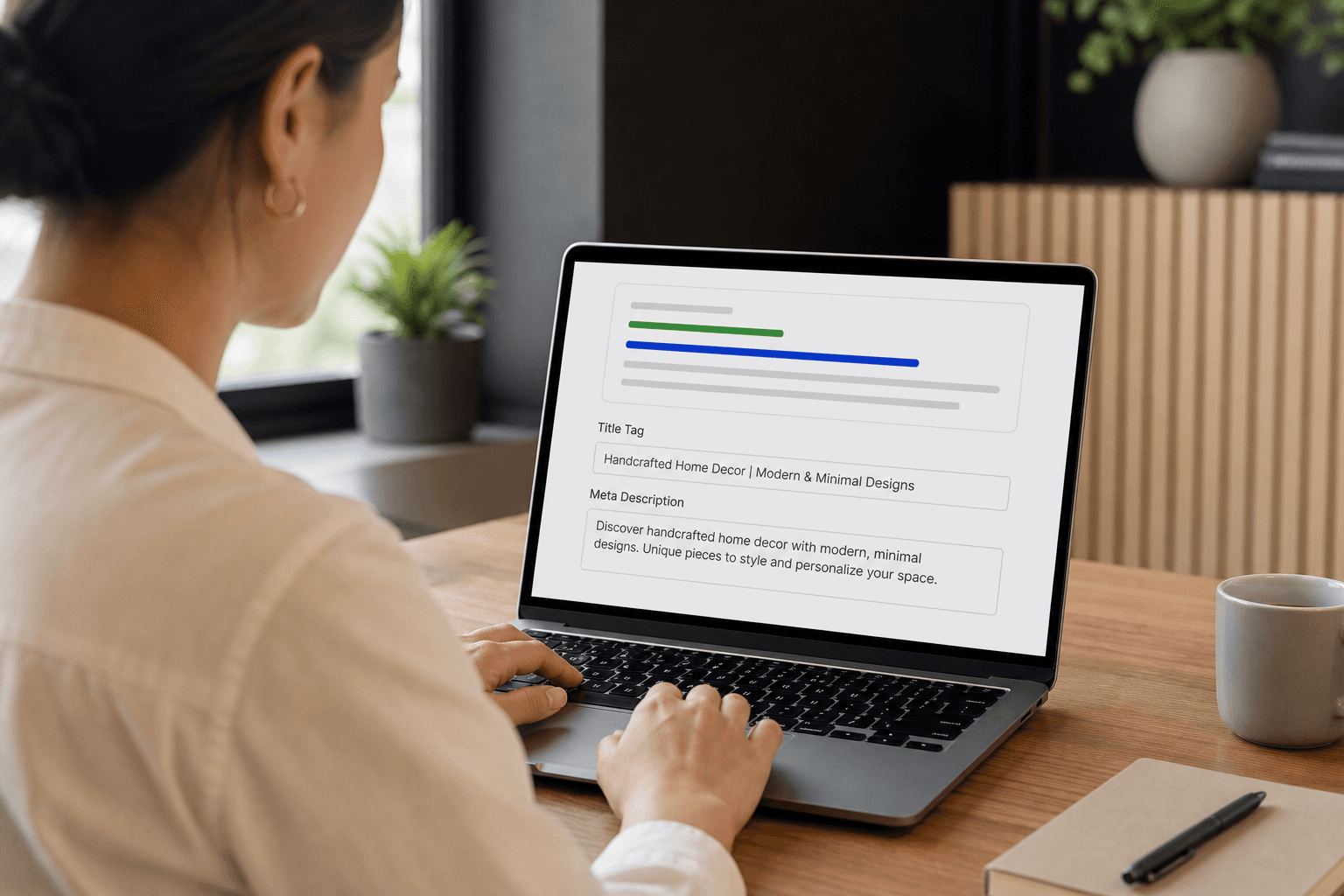
| Impressions rise but clicks stay low | Weak result messaging or mismatched intent | Improve the title, description, opening answer, and search alignment. |
| Many terms sit on page two | Relevant page needing more depth, support, or authority | Improve the page and add links from relevant established content. |
| The wrong page ranks | Overlapping pages or unclear topical signals | Choose a primary page and differentiate, consolidate, or redirect where appropriate. |
| Organic visibility is acceptable but Maps visibility is weak | Incomplete local signals | Review the profile, services, reviews, service-area pages, and consistency. |
| Clicks and positions decline over time | Freshness, demand, technical issues, or stronger competitors | Compare affected queries and pages, then make one evidence-based update. |
A Sustainable Google Ranking Workflow for Small Businesses#
- Select priority queries. Focus on profitable services, products, locations, and customer questions.
- Review the trend. Compare impressions, clicks, click-through rate, and average position over a meaningful period.
- Inspect the affected page. Confirm that it is accessible, focused, useful, current, and aligned with the query.
- Choose one main improvement. Avoid changing everything at once if you want to understand what helped.
- Strengthen supporting signals. Add internal links, improve local information, and pursue credible mentions when authority is the constraint.
- Measure business outcomes. Track qualified visits, calls, form submissions, bookings, or sales alongside rankings.
Repeating this process monthly creates a clearer operating rhythm than checking a rank every day. Observe a pattern, make a focused change, and allow enough time to evaluate it.
Where SEO Automation Helps and Where Review Still Matters#
SEO automation is most useful when it coordinates repeated execution rather than promising a ranking outcome. Research, topic planning, content generation, optimization, internal linking, publishing, and Search Console-informed review can otherwise become disconnected tasks.
UpliftAI is designed to connect those steps and supports publishing through WordPress, Webflow, Shopify, and Framer integrations. Its local SEO workflow also supports Google Business Profile activity and service-page work. Automation can reduce the effort required to maintain a consistent process, but it cannot decide whether a business claim is accurate or whether a topic deserves priority without review.
Keep human control over service details, pricing, locations, regulated claims, customer promises, and strategic priorities. The goal is not to publish blindly. It is to make sound decisions easier to execute consistently.
Google Search Ranking Improvement Checklist#
- Have you selected queries tied to real services, products, locations, or customer questions?
- Are you comparing trends and query groups instead of one daily position?
- Can Google access, index, and distinguish the page you want to rank?
- Does the page directly satisfy search intent with specific information?
- Are relevant established pages linking to it?
- Is your Google Business Profile accurate and supported by service pages and genuine reviews?
- Have you compared relevant referring domains instead of chasing a fixed backlink number?
- Are you measuring qualified actions, not just impressions and rankings?
- Does automation include review of facts, claims, and publishing decisions?
Frequently Asked Questions#
Why does my Google search rank change from day to day?#
Results vary because of query wording, location, device, search features, seasonality, competition, and changes to search results. Compare consistent query groups and longer trends before taking action.
Is Google Search Console average position the same as my Google search rank?#
No. A keyword position is a specific result in a specific context. Average position combines impressions across queries, pages, and appearances, making it useful for trends but not every individual ranking.
Why do I rank well for some searches but not important service keywords?#
Different queries have different intent and competition. Your site may be relevant for branded or informational searches while lacking a focused service page, local relevance, internal support, or authority for commercial terms.
How is local Google Maps ranking different from standard organic ranking?#
Maps visibility depends on local relevance and business-profile signals in addition to website quality. Accurate information, appropriate services, location context, reviews, and supporting pages help Google assess fit for nearby searches.
Can SEO automation improve Google search rank without publishing blindly?#
Automation can organize research, optimization, linking, publishing, and performance review, but it cannot guarantee a position. Use it with clear priorities, quality controls, accurate information, and human review of important claims.
Conclusion: Use Ranking Data to Choose the Next Fix#
Your Google search rank is a diagnostic signal, not a complete business result. The most useful interpretation combines query intent, average position, impressions, clicks, page quality, local relevance, internal links, and referring domains.
When visibility is weak, identify the constraint before making changes. Technical access calls for a technical check, an intent mismatch calls for better content, a local gap calls for stronger business signals, and an authority gap calls for relevant mentions.
For an execution-focused approach supporting keyword research, content optimization, internal linking, publishing, Search Console integration, and local SEO activity, visit UpliftAI.