


On this page
Improving Google search ranking is the repeatable process of aligning content, technical performance, and authority so your pages appear higher on search results. It means matching search intent, passing Core Web Vitals, using structured data, and earning credible links. When done consistently, rankings lift, click-through increases, and qualified visits grow.
By UpliftAI | Last updated: 2026-07-04
Quick Summary#
To improve Google search ranking fast, fix technical blockers, publish intent-matched cluster content, strengthen internal linking, and earn relevant backlinks. Measure changes in Search Console, test titles to raise CTR, and refresh high-value pages quarterly. UpliftAI automates this end-to-end so you can scale consistently.
Here’s the high-level playbook we apply and automate with UpliftAI’s Multi-Agent SEO Brain:
- Stabilize the foundation: pass Core Web Vitals (LCP < 2.5s, INP < 200ms, CLS < 0.1), ensure HTTPS, valid sitemaps, and correct canonicals.
- Map search intent: cluster related keywords into hubs and spokes, then cover each subtopic comprehensively.
- Optimize on-page: clear titles (50–60 chars), meta descriptions (150–160 chars), strong headings, descriptive media and alt text, and appropriate schema.
- Build authority: add contextual internal links and earn relevant, trustworthy backlinks over time.
- Measure and iterate: improve CTR, consolidate cannibalized pages, and refresh content every 90–120 days.
| Lever | What to do | Signals to watch |
|---|---|---|
| Technical | Fix crawl/index, pass CWV | Index coverage, LCP/INP/CLS |
| Content | Match intent, add schema | Impressions, dwell time |
| Internal Links | Hub → spoke structure | Pages/session, crawl depth |
| Backlinks | Earn relevant mentions | Referring domains |
| Engagement | Lift SERP CTR | CTR by query |
Before You Start (Prerequisites)#
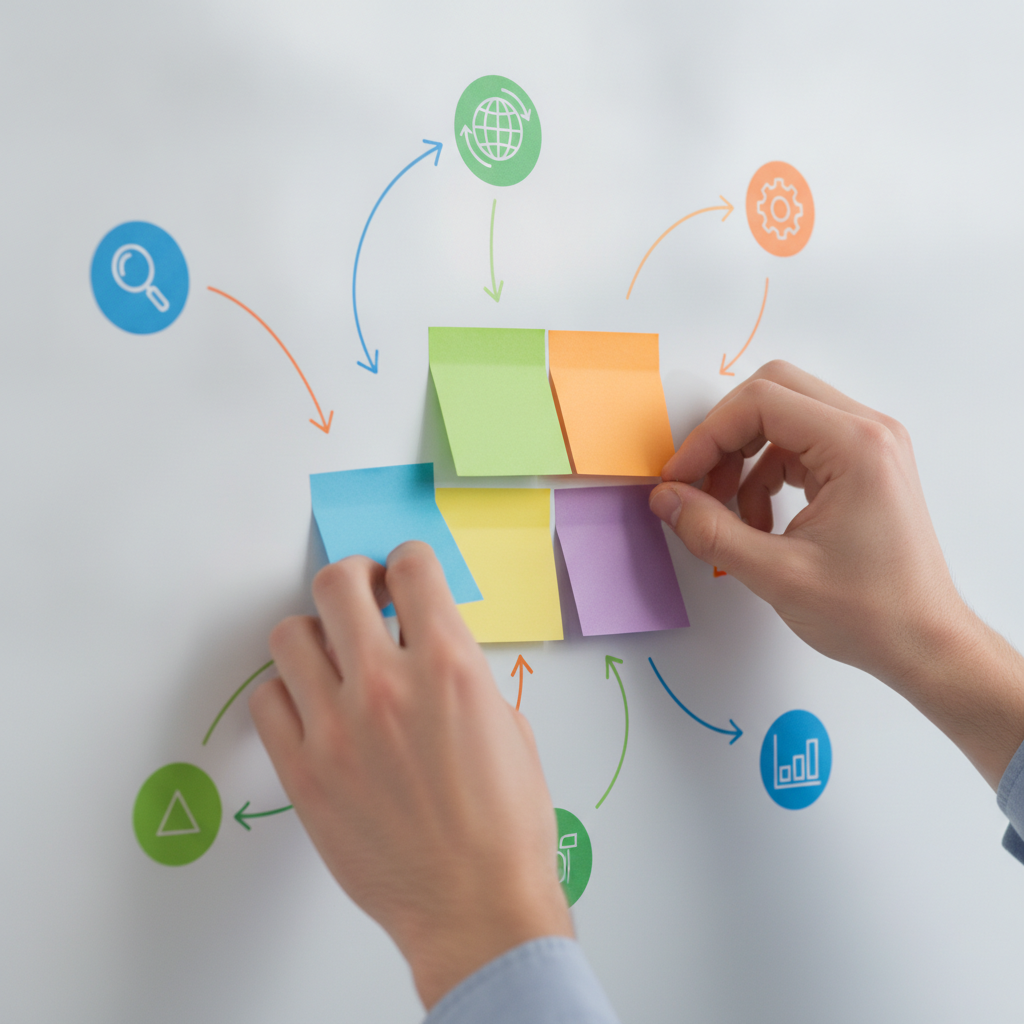
Establish your baseline first: connect Search Console, benchmark Core Web Vitals, crawl your site, and inventory content by intent and keywords. Define 3–5 topic hubs and governance rules so every new page has a purpose and internal links. This prevents cannibalization and speeds up results.
Lay a strong foundation before making changes. We see the biggest lifts when teams do the following in week one:
- Verify Google Search Console: ensure sitemaps are submitted and coverage reports show healthy indexing. Track top queries, average position, CTR, and pages receiving impressions.
- Measure Core Web Vitals: set targets per template: LCP < 2.5s, INP < 200ms, CLS < 0.1. Use field data to guide improvements.
- Run a full crawl: find 404s, redirect chains, duplicate titles, orphan pages, and canonical conflicts. Keep redirects to a single hop wherever possible.
- Inventory content: list each URL, assign a primary keyword and intent (informational, transactional, navigational), and map current internal links.
- Define clusters: choose hubs tied to your services (e.g., “office cleaning checklist,” “landscaping ideas”) with 6–10 spokes each.
- Governance: one URL per primary intent, unique H1 per page, descriptive slugs, and schema-by-template (Article, FAQ, Product/Service when relevant).
- Cadence: weekly is the minimum. UpliftAI can safely automate daily publishing to accelerate topical authority.
In our experience, small inconsistencies like a stray noindex or a mismatched canonical can mute entire sections. A 45-minute crawl often reveals the top five fixes that unlock indexing and impressions.
How to improve Google search ranking: the step-by-step process#
Follow eight steps: fix crawl and index issues, research intent-led keywords, optimize on-page elements, publish comprehensive cluster content, strengthen internal links, earn relevant backlinks, bolster local signals, and iterate monthly using Search Console data.
1) Eliminate technical blockers#
Search engines need clean access and fast pages. Stabilize the technical base so content and links can compound.
- Robots and sitemaps: allow important paths, disallow admin and parameterized junk. Submit a single XML sitemap index and keep sitemap files under 50,000 URLs each.
- Index coverage: ensure primary pages declare self-referencing canonicals. Resolve “duplicate without user-selected canonical” issues quickly.
- HTTPS and security: force HTTPS, eliminate mixed content, and keep HSTS enabled sitewide.
- Core Web Vitals: hit LCP < 2.5s, INP < 200ms, CLS < 0.1. Serve images as WebP/AVIF, defer non-critical JS, and lazy-load below the fold.
- Thin/duplicate URLs: noindex filters and tag pages that don’t add value; consolidate near-duplicates with 301s to the canonical.
Example: a local services site removed two-hop redirects, fixed a rogue noindex on service templates, and compressed hero images. Indexed pages rose the same week, and impressions climbed over the next 10–14 days. Technical cleanup is often the fastest unlock.
2) Research intent and map keywords into clusters#
Ranking improves when each URL targets a clear job to be done. Group related queries and cover them deliberately.
- Start with long-tail: look for queries with concrete modifiers (how to, near me, best, checklist) that reveal intent.
- Build topic clusters: create a hub that defines the theme, then spokes answering sub-questions, processes, and comparisons.
- Avoid cannibalization: one primary keyword per URL. Merge overlapping posts into a stronger canonical page.
- Use real data: mine Search Console impressions to expand what’s already resonating and fill content gaps.
- Automate discovery: UpliftAI’s Researcher agent finds keywords, forms clusters, and drafts briefs programmatically.
Take landscaping: a “backyard design ideas” hub with spokes on materials, lighting, seasonal maintenance, and space planning. The internal links between these raise topical authority and session depth.
3) Optimize on-page elements for clarity and clicks#
On-page optimization helps users and crawlers understand your page fast, improving CTR and engagement.
- Title tags: 50–60 characters, front-load the primary keyword, and make a clear promise (“Step-by-step plan,” “Checklist”).
- Meta descriptions: 150–160 characters focusing on benefits and next steps. Treat snippets as ad copy for organic.
- Headings: one H1 per page; use descriptive H2/H3s that mirror common questions and tasks.
- Media and alt text: compress images and write 100–125 character alt text describing the image’s purpose.
- Structured data: add Article/FAQ/HowTo markup when appropriate to qualify for rich results.
We regularly test titles and meta to lift CTR by fractional points that, across many queries, move URLs into stronger average positions.
4) Publish comprehensive, helpful cluster content#
Depth wins when it matches intent. Cover the topic completely without filler.
- Write for outcomes: include definitions, steps, examples, and FAQs in one flow so readers finish the job they came for.
- Show experience: add first-hand insights, mini case notes, and process screenshots or diagrams.
- Keep it fresh: update high-value pages at least quarterly with new examples and clarified steps.
- Automate execution: UpliftAI writes, optimizes, and publishes across WordPress, Webflow, and Shopify, with schema and internal links handled for you.
For a commercial cleaning company, we cluster around “office cleaning checklist,” “deep cleaning schedule,” and “disinfection standards,” then add seasonal updates. Publishing velocity plus tight topical focus builds durable relevance.
5) Strengthen internal links deliberately#
Internal linking concentrates authority and improves discoverability for both users and crawlers.
- Hub → spoke: link from the hub to every spoke and back; add lateral links between related spokes.
- Anchor variety: mix exact, partial, and descriptive anchors; keep it natural.
- Placement: add contextual links in the first 150–200 words when it reads naturally; avoid relying on sidebars alone.
- Automation assist: UpliftAI’s Internal Linking Engine inserts relevant links at scale and prevents orphan pages.
As clusters mature, crawl depth typically shrinks while pages/session rises, two signals that often precede ranking lifts.
6) Earn credible backlinks#
Backlinks remain a durable trust cue when they’re topically relevant and editorially placed.
- Asset-led approach: publish data roundups, interactive checklists, or visual guides that people want to cite.
- Contextual placements: aim for links within body copy on relevant pages rather than footers or directories.
- Reclaim equity: find 404s with links and 301 to the best match; request correction for unlinked brand mentions.
- Automated momentum: UpliftAI’s backlink network helps earn quality references steadily over time.
One contextual mention from a respected industry site can outperform dozens of weak directory links. Focus on relevance and placement quality.
7) Fortify local signals (for eligible businesses)#
Service-area and brick-and-mortar businesses benefit from stronger local prominence across Maps and organic.
- Google Business Profile: complete categories, services, and attributes; post weekly with fresh photos and updates.
- NAP consistency: keep name, site, and phone consistent across listings; remove duplicates and fix mismatches.
- Reviews and responses: invite steady reviews and reply thoughtfully, using service terms naturally.
- Content synergy: mirror your website’s clusters in GBP posts and Q&A. UpliftAI can schedule these automatically.
We’ve seen food service, cleaning, landscaping, real estate, and events brands gain faster when website content and GBP activity reinforce one another.
8) Measure, learn, and iterate monthly#
Iteration compounds results. Review progress every 30 days and ship targeted improvements.
- Query mining: improve pages already ranking on page two for high-intent terms; small enhancements often tip them to page one.
- Lift CTR: test titles/meta for queries with impressions but low clicks; add FAQ sections to win more rich result real estate.
- Fight decay: refresh older posts with new examples, updated screenshots, and clarified steps.
- Cannibalization: merge competing URLs, set a single canonical, update internal links, and monitor in 2–3 weeks.
We track a monthly scorecard: pages added, posts refreshed, CWV pass rate, new referring domains, and CTR changes for the top 20 queries. It keeps the engine honest and focused.
Our Multi-Agent SEO Brain researches, writes, optimizes, links, and publishes for you. Explore recent wins in our case studies or connect your CMS and start shipping today.
Start with UpliftAI and publish directly to WordPress, Webflow, or Shopify, hands-free.
Troubleshooting: Diagnose and fix common ranking issues#
When rankings stall or drop, check indexing, Core Web Vitals, and content overlap first. Then evaluate CTR, backlinks, and recent site changes. Fix technical issues, consolidate cannibalized pages, and refresh content with clearer answers and stronger internal links.
Sudden drops after a change#
- Rollback and isolate: revert big template or navigation changes; re-deploy incrementally to spot the culprit.
- Index checks: look for unintended noindex, canonicals pointing to the wrong URL, or blocked paths.
- Link equity loss: confirm 301s preserve signals after URL renames; eliminate redirect chains.
In many audits, a single tag or robots rule explains the dip. A quick diff and server log review usually surfaces it fast.
Pages not indexing#
- Content quality: expand thin pages; add original media, examples, and FAQs that answer the query better.
- Duplicate detection: merge near-duplicates and point internal links to the canonical winner.
- Discoverability: link from hubs, include in XML sitemaps, and request indexing for priority URLs.
Indexing improves when a page is genuinely helpful and easy to find in your site structure.
Failing Core Web Vitals#
- Largest Contentful Paint: serve next-gen images, preconnect critical domains, and reduce render-blocking JS/CSS.
- Interaction to Next Paint: minimize main-thread work, defer non-critical scripts, and limit oversized libraries.
- Cumulative Layout Shift: set image and ad slot dimensions; avoid late-loading banners that push content.
Template-level fixes often improve dozens of pages at once. Prefer field data over lab numbers to judge real impact.
Keyword cannibalization#
- Identify overlaps: list URLs ranking for the same head term; compare intent coverage to find the best candidate.
- Choose a winner: fold secondary pages into the strongest URL and 301 them; update internal links to point at the winner.
- Clarify scope: rewrite the intro, add unique sections, and refine headings to differentiate.
Consolidation concentrates signals and often yields a net lift within weeks after recrawl.
Advanced tips for durable growth in 2026#
Win long-term by building topic authority, expanding structured data, optimizing for AI and voice answers, and maintaining steady publishing velocity. Use Search Console trends to steer clusters, and refresh high-value URLs quarterly to prevent content decay.
Optimize for AI and voice answers#
- Concise definitions: lead sections with 40–60 word summaries using classes that support speakable content.
- FAQ blocks: answer 3–5 common questions in 2–4 sentences each to capture rich results and voice responses.
- Evidence and examples: include first-hand scenarios and cite reputable industry resources when helpful.
Answer engines prefer clear, extractable statements and well-structured pages. UpliftAI content is designed to be easily cited by chat-based engines.
Expand structured data coverage#
- Article, FAQ, HowTo: improve eligibility for rich results and featured snippets across your cluster.
- Organization and Person: surface trust signals with publisher and author data.
- Service markup: clarify offerings (without pricing) where it helps readers understand scope.
Properly labeled content tends to earn more qualified clicks and stronger snippet placement.
Build topic authority, not just pages#
- Depth then breadth: complete a cluster before moving on; aim for 6–10 spokes per hub.
- Consistent velocity: maintain weekly to daily cadence; consistent shipping encourages more frequent crawling.
- Link harmony: orchestrate hubs, spokes, and lateral links; keep orphan pages at zero.
We often see clusters hit a tipping point around the sixth or seventh spoke, where impressions and average position lift across all related URLs.
Leverage multimedia and multilingual reach#
- Video embeds: add short explainers and transcribe key points for skimmers.
- Images and diagrams: illustrate steps and outcomes; balance quality with file size.
- Languages at scale: UpliftAI supports 150+ languages so you can expand reach when relevant.
Visual anchors increase dwell time and clarify complex steps. Multilingual variants can unlock incremental impressions in adjacent markets.
Stay current with guidance#
For broader context on evolving search behavior and multimodal ranking, review this overview of multimodal SEO strategy. For a practical breakdown of on-page wins, see this analysis on ranking on Google. A deeper dive on Search Console workflows lives in our Search Console guide.
Frequently Asked Questions#
Most ranking questions focus on timelines, backlinks, content length, and technical signals. Prioritize intent match, page speed, and smart internal links. Consistent publishing and targeted refreshes usually lift positions within a few months.
How long does it take to improve rankings?#
Many sites see movement within 4–8 weeks once technical issues are fixed and new content ships. Competitive terms take longer. Fast wins often come from CTR lifts, internal links, and refreshing pages already close to page one.
How to improve Google search ranking without backlinks?#
You can grow by matching intent, strengthening on-page optimization, and improving Core Web Vitals. Use internal links to concentrate authority, and add FAQ sections to qualify for rich results that raise CTR.
How often should I publish new content?#
Weekly is a reliable baseline. If you need topical authority faster, publish multiple posts per week within a focused cluster. Refresh top URLs quarterly to prevent content decay and maintain rankings.
What on-page factors matter most today?#
Clear titles, descriptive headings, concise intros, helpful media with accurate alt text, and appropriate schema are foundational. Pair these with fast load times and clean information architecture.
Additional Resources#
Use trusted references and clear checklists to align with current best practices. Combine Search Console insights, technical fixes, and cluster content to accelerate ranking improvements and conversion-ready traffic.
For more strategy and examples, explore the UpliftAI blog library and recent case studies. If you want the process handled for you, meet the Multi-Agent SEO Brain and connect your CMS. When you’re ready, start publishing automatically or learn more about our approach on the UpliftAI home page.
Conclusion#
Improving Google rankings is a system: remove friction, publish intent-matched clusters, link smartly, and iterate with data. When this engine runs weekly, growth compounds. Automation keeps momentum high without adding overhead.
Key takeaways#
- Fix technical issues first, then build clusters and internal links.
- Lift CTR with sharper titles and meta descriptions.
- Refresh top URLs quarterly to fight content decay.
- Use Search Console trends to steer your roadmap.
- Automation sustains publishing velocity and consistency.
Next steps#
- Identify three hubs and 6–10 spokes per hub.
- Ship one optimization and one new post this week.
- Set a monthly scorecard: CWV, CTR, referring domains, pages added.
- Let UpliftAI automate the workflow so you can focus on operations.
Want an execution engine that never sleeps? See how UpliftAI works and spin up your automated SEO program today.