


On this page
- Overview and Table of Contents
- What Is SEO Content Creation?
- Why SEO Content Creation Matters in 2026
- How SEO Content Creation Works (Step-by-Step)
- Types of SEO Content and When to Use Them
- SEO Content Creation Best Practices
- Tools and Resources for SEO Content Creation
- Case Studies and Real-World Examples
- Planning, Resourcing, and Timelines
- SEO Content Creation: Frequently Asked Questions
- Conclusion and Next Steps
SEO content creation is the systematic process of researching, planning, producing, and optimizing content so it ranks on Google and appears in AI answers. It connects topics to search intent, on-page standards, and internal links to drive qualified traffic and leads in your local area. UpliftAI automates this end-to-end.
By UpliftAI • Last updated: May 21, 2026
Overview and Table of Contents#
This guide shows how to plan, write, and optimize SEO content that ranks on Google and surfaces in AI answers. You’ll learn the strategy, workflow, tools, and examples UpliftAI uses to deliver consistent visibility, stronger local rankings, and steady lead growth, without hiring a large team.
Skim first, dive deeper where you need more detail. Each section is action-focused and built for fast implementation.
- What is SEO content creation?
- Why it matters in 2026
- How it works (step-by-step)
- Types of SEO content
- Best practices
- Tools and resources
- Case studies and examples
- Planning, resourcing, and timelines
- FAQ
- Conclusion and next steps
Want the execution handled for you? Explore our SEO agent approach that mirrors a full content team, from research to publishing.
What Is SEO Content Creation?#
SEO content creation is the practice of planning, writing, and optimizing content to match search intent, earn rankings, and win clicks. It blends keyword research, topical authority, structured formatting, multimedia, and internal links so each page can rank, convert, and support your broader topic cluster.
Here’s the simple idea: align what you publish with what people actually search for and how engines evaluate quality. When your content meets intent, uses clean structure, and fits into a logical cluster, rankings follow.
- Search intent fit: Answer the exact question a searcher asks (informational, commercial, transactional, or navigational).
- On-page signals: Clear titles (50–60 characters), meta descriptions (150–160), optimized headings, descriptive alt text (< 125 characters), and fast load times.
- Authority building: Internal links (5–7 per article), topical clusters, and a consistent cadence (2–4 fresh posts weekly) strengthen signals.
- Local visibility: Service pages and posts that reference your area support map pack performance and Google Business Profile engagement.
UpliftAI operationalizes these fundamentals with a multi-agent workflow, Researcher, Strategist, Writer, Optimizer, and Publisher, so every article supports your cluster and moves key metrics.
Why SEO Content Creation Matters in 2026#
Consistent SEO content powers discovery, conversions, and compounding authority. In 2026, ranking on Google and being cited by AI assistants requires structured pages, clear expertise, and steady publication. Brands that publish helpful content weekly see sustained traffic, more inquiries, and stronger local visibility.
Three realities shape the playbook this year:
- AI answer engines matter: Content needs clean definitions, speakable summaries, and unambiguous steps for chat-based assistants to cite.
- Local is won with content: Businesses that post regularly and update their Google Business Profile build trust and earn more map impressions.
- Cadence compounds: Publishing 2–4 times per week typically accelerates impressions within 30–60 days and stabilizes rankings within 90–120 days.
UpliftAI focuses on both Google and AI-search outcomes. Our AI Citation Optimization patterns structure answers for LLMs while our on-page framework aligns to search fundamentals, so you’re present wherever buyers look.
Local considerations for your area#
- Reference neighborhood-level terms naturally in service pages and blogs, then interlink them to a primary “hub” page to reinforce local relevance.
- Increase posting frequency around seasonal peaks (e.g., event season, move-in periods, landscaping months) to match real local demand surges.
- Capture and upload fresh photos to your local listing monthly; pair posts with short updates that link back to supporting articles on your site.
To see how we structure posts that earn visibility locally and in search, browse our latest blog insights.
How SEO Content Creation Works (Step-by-Step)#
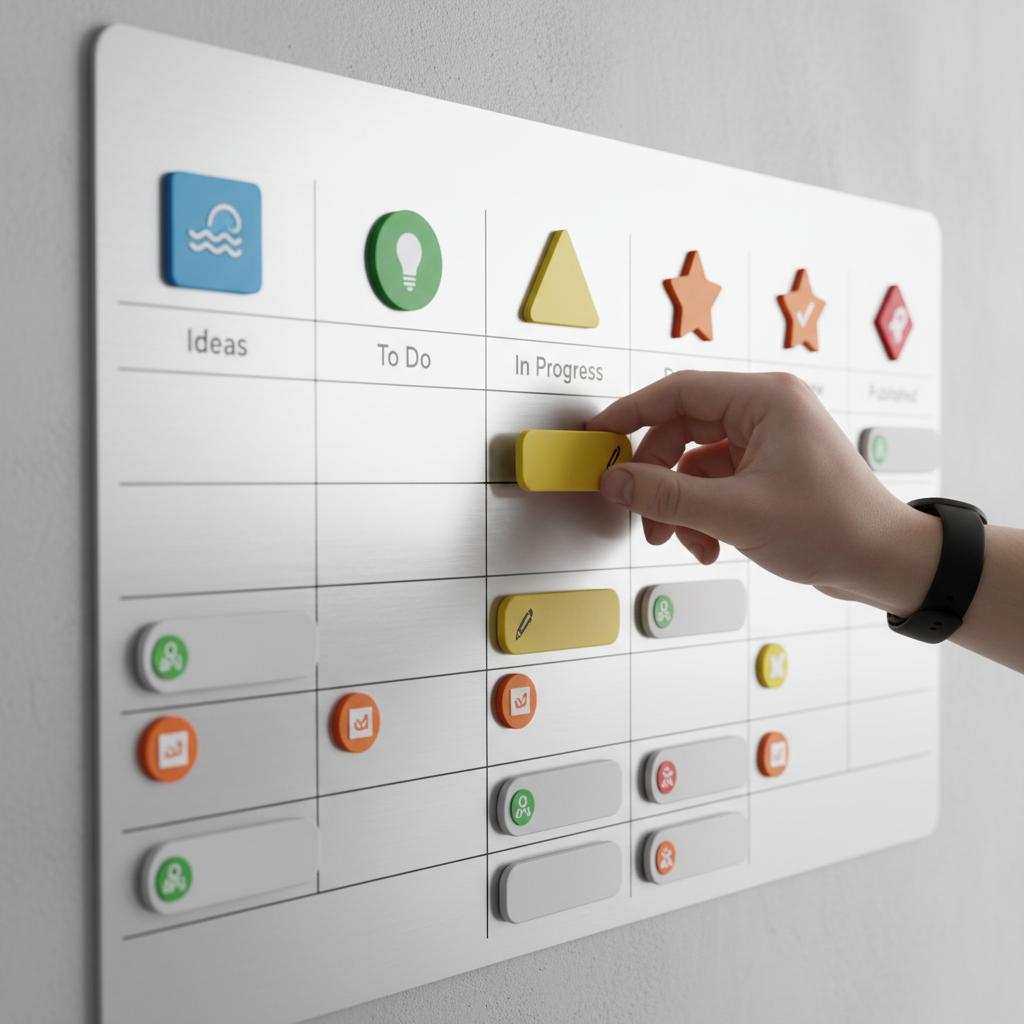
A reliable SEO content workflow moves from research to publishing in clear stages: discover topics, map clusters, draft, optimize, interlink, publish, and iterate from Search Console data. UpliftAI automates each stage so output stays consistent, accurate, and aligned to business goals.
Below is the practical sequence we run for small and mid-sized teams.
- Discover demand: Identify 50–150 keywords aligned to services and buyer questions; sort by intent and difficulty.
- Map topic clusters: Group keywords under 6–12 hubs; define pillar pages and 8–15 supporting posts per hub.
- Outline with intent: Match H2/H3s to sub-intents; add a 40–60 word featured answer under each H2.
- Draft for clarity: Use short paragraphs (2–3 sentences) and selective bullet lists; aim 1–2% keyword usage, never forced.
- On-page optimization: Titles (50–60 chars), meta descriptions (150–160), descriptive slugs, 5–7 internal links, 1–2 external sources when available.
- Publish with structure: Include schema, alt text, and compressed images; ensure LCP under ~2.5 seconds.
- Measure and iterate: Review impressions, CTR, and average position in 14–30 day windows; refine headlines and links.
| Stage | What you do | How UpliftAI helps |
|---|---|---|
| Research | Collect keywords and questions; prioritize by intent | AI-powered keyword discovery and clustering |
| Strategy | Design clusters and internal link plan | Automated topic clusters and linking blueprint |
| Writing | Create drafts aligned to search intent | Multi-agent Writer generates human-grade drafts |
| Optimization | Refine titles, meta, headings, images | Optimizer tunes on-page signals and schema |
| Publishing | Push to CMS; add links | Direct WordPress/Webflow/Shopify publishing |
| Authority | Add internal/external links; build trust | Internal Linking Engine + automated backlinks |
| Iteration | Monitor, update, and expand | Search Console integration guides updates |
See how the workflow runs in the background with our SEO agent, built to publish on schedule without hand-holding.
Types of SEO Content and When to Use Them#
Mix formats to cover the buyer journey: service pages for intent, blogs for discovery, guides for authority, FAQs for quick answers, and location pages for local reach. Each type supports a cluster so search engines, and AI assistants, can confirm expertise across related topics.
Core formats that move the needle#
- Service pages: Transactional intent; include clear benefits, FAQs, and schema. Aim 800–1,200 words with 5–7 internal links.
- Blog posts and guides: Informational intent; 1,200–2,500 words with strong intros and H2 summaries.
- How-tos and checklists: Step-by-step clarity for long-tail searches; add numbered steps and visuals.
- Comparison pages: Mid-funnel decisions; lay out pros/cons and use a simple table.
- Location pages: City/region targeting; use neighborhood terms naturally and link to relevant posts.
- FAQs: Speakable chunks; 2–4 sentence answers for fast comprehension and voice assistants.
Examples from UpliftAI users#
- Food service: “Best catering menu ideas by season” supports the main catering service page and earns event-driven traffic spikes.
- Commercial cleaning: “School cleaning checklist” pairs with a compliance-focused service page to win institutional searches.
- Real estate: “Staging checklist” and “Neighborhood move-in guide” help capture relocation and listing-intent demand.
- Event venues: “Venue capacity planning” aligns with availability intent and drives tour requests.
For format inspiration and structure patterns, review our running library of content strategy breakdowns.
SEO Content Creation Best Practices#
Win consistent rankings by matching search intent, structuring pages for skim-readers, and interlinking every post into a cluster. Keep titles tight, meta persuasive, media compressed, and answers concise. Then update pages based on search data and user signals.
On-page checklist#
- Title: 50–60 characters; lead with benefit or outcome.
- Meta description: 150–160 characters; include a verb and value hook.
- Headings: One idea per H2/H3; add a 40–60 word summary under each H2.
- Links: 5–7 internal links; 1–2 external references when available and relevant.
- Media: 1–3 images with alt text; keep images under ~150 KB when possible.
- Speed: Aim LCP under ~2.5s; lazy-load below-the-fold images.
Content quality patterns#
- Intent-first drafting: Open with the answer in 40–60 words; then provide steps and examples.
- Concrete data points: Add one number every 150–200 words (e.g., counts, ranges, timeframes) to anchor claims.
- Plain language: Favor 8th–10th grade readability with short sentences.
- Cluster integrity: Link new posts to at least two existing pages and one hub.
These practices are baked into UpliftAI’s Optimizer and Publisher so each piece ships with consistent technical and editorial quality.
Tools and Resources for SEO Content Creation#
Use an execution-first stack. UpliftAI automates research, drafting, optimization, internal linking, publishing, and local listing activity so you stay consistent. Complement it with analytics, image compression, and a fast theme to protect Core Web Vitals and conversions.
Where UpliftAI fits#
- Multi-Agent SEO Brain: Researcher → Strategist → Writer → Optimizer → Publisher working as one system.
- Internal Linking Engine: Autonomously connects new posts to pillars and related articles.
- AI Citation Optimization: Structures definitions and steps for AI assistants to cite.
- CMS integrations: Direct publishing to WordPress, Webflow, Shopify, and Framer.
- Google Business Profile activity: Keeps your listing fresh with posts and updates.
- Search Console integration: Surfaces query opportunities and cannibalization risks.
Looking for a hands-off setup? Start with the UpliftAI SEO agent and let the platform maintain cadence while you focus on operations.
See it in action. Get a personalized content plan, cluster map, and first draft generated for your site.
Get started or review plan details.
Case Studies and Real-World Examples#
Real gains come from consistent execution across clusters. These anonymized examples show how UpliftAI’s automated workflow improved impressions, local visibility, and inquiries across common small-business sectors, using the same repeatable approach outlined in this guide.
Food service: catering and takeout#
- Built a “catering” hub with 12 support posts (menus by season, delivery FAQs, order timelines).
- Added 5–7 internal links per article to the main catering page and nearby cities.
- Published new posts 3x per week; local listing photos updated monthly.
Outcome: measurable increases in discovery searches and branded queries within 60–90 days as topical authority consolidated.
Commercial cleaning: schools and offices#
- Launched “facility cleaning” cluster (compliance checklists, high-traffic area guides, supplies breakdowns).
- Paired service pages with FAQ blocks and location pages; used how-to posts to capture informational intent.
- Monitored CTR and refined titles after 21–28 days to match query language.
Outcome: more quote requests tied to mid-funnel pages (checklists and comparisons) that linked directly to the primary service CTA.
Real estate: listings and move-in content#
- Produced guides on staging, inspections, and neighborhood move-in tips.
- Embedded related YouTube videos and interlinked listings to relevant guides.
- Refreshed top performers every 45–60 days with new internal links.
Outcome: longer on-page time and more form fills from visitors landing on educational posts then clicking to services.
Explore how we design these plays in our success stories.

Planning, Resourcing, and Timelines#
Plan on 6–12 clusters per core service, each with 8–15 supporting posts and one pillar. Publish 2–4 times weekly for 12 weeks to establish momentum, then maintain a steady weekly cadence. Revisit internal links and titles every 30–60 days to match emerging queries.
Editorial calendar baselines#
- Quarterly plan: 24–40 posts per quarter across 2–4 clusters is a reliable baseline for SMBs.
- Per-piece targets: 1,200–2,000 words, 5–7 internal links, 1–2 supporting images, one table or checklist.
- Refresh rhythm: Review top URLs every 45–60 days; add new FAQs and crosslinks.
Who does what#
- Strategy: Define hubs, prioritize queries, and set the publishing order.
- Production: Draft, edit, and optimize with consistent structure and summaries.
- Publishing: Add schema, interlinks, and images; push to the CMS.
- Growth: Track Search Console, tighten titles, and expand clusters.
Or, offload the entire pipeline to the UpliftAI SEO agent, which executes these roles automatically and keeps your Google Business Profile active.
SEO Content Creation: Frequently Asked Questions#
These short, speakable answers address the most common questions teams ask when shifting to an execution-first SEO content program. Each response is concise and action-oriented so your team can move forward quickly.
How many internal links should each article include?#
Aim for 5–7 internal links per article. Link to a pillar page, two related posts, and one service or conversion page. This creates strong topical clusters and gives users clear next steps.
What word count works best for ranking?#
Most informational posts perform well between 1,200 and 2,000 words when they’re focused, structured with H2/H3s, and include a 40–60 word answer under each H2. Service pages can win with 800–1,200 words if intent is tight and links are strong.
How often should we publish new content?#
Publish 2–4 times weekly for the first 8–12 weeks to build momentum and coverage across your clusters. After that, maintain at least one new post per week and refresh top URLs every 45–60 days.
How does AI change content strategy?#
AI assistants favor pages with clear definitions, concise steps, and unambiguous summaries. Add a 40–60 word featured answer under each H2, use speakable schema, and structure content in clusters. UpliftAI bakes these patterns into every draft and publish.
Conclusion and Next Steps#
Successful SEO content creation blends intent-fit writing, technical precision, and dependable publishing. When you connect posts into clusters and iterate from search data, rankings stabilize and leads grow. Automation ensures you actually keep the cadence that compounding results demand.
- Key takeaways: match intent, structure pages for skimming, link every post into a cluster, and iterate from data.
- Action steps: pick 2–4 hubs, outline 8–15 posts per hub, publish 2–4 times weekly, and refresh winners every 45–60 days.
- Next move: Try the execution engine that does it for you, the UpliftAI SEO agent.
Ready to build momentum? Explore our platform, browse blog insights, and review success stories. When you’re set, get started.
For a fundamentals refresher on local optimization basics, see this accessible beginner’s guide to local SEO.