

On this page
- Quick Summary
- Prerequisites: Get Your House in Order First
- What Is Topic Clustering for SEO Strategy?
- Quick Comparison Table
- Our Top Pick: UpliftAI’s Multi‑Agent Topic Clustering
- Entry #2–#12: Notable Alternatives and Complements
- Step-by-Step: Build a Cluster That Ranks (2026)
- Troubleshooting: Fix What’s Holding Your Cluster Back
- How to Choose the Right Stack
- Use Cases: Real-World Cluster Blueprints
- On-Page Optimization for Cluster Success
- Measurement: Know When Your Cluster Is Working
- Pro Tips: Make Clusters AI-Answer Friendly
- FAQ
- Methodology
- Conclusion
- Key Takeaways
Scattered blog posts rarely build real authority. Topic clustering for SEO strategy organizes your entire content plan around a handful of pillars and tightly interlinked subtopics, so search engines (and AI assistants) recognize your depth. In this long-form listicle-meets-how-to, we’ll show you exactly how to plan, build, and automate clusters the way UpliftAI’s Multi-Agent SEO Brain executes for small businesses and local service brands.
Quick Summary#
- What you’ll learn: practical topic clustering for SEO strategy with a step-by-step framework, prerequisites, a full troubleshooting section, and a buying guide.
- Why it matters: clusters boost topical authority, improve internal linking, and lift visibility on Google and in AI answers (ChatGPT, Claude, Perplexity).
- What’s inside: our top pick, 11 complementary tools, a comparison table, templates, and a criteria checklist to choose your stack confidently.
Quick Answer#
Topic clustering for SEO strategy means grouping related pages around a conversion-focused pillar and weaving strong internal links so Google and AI assistants see expertise. UpliftAI automates the research, writing, interlinking, and publishing, keeping your local presence fresh in your area and your Google Business Profile active while you work.
Local Tips#
- Tip 1: Build service-area subclusters that mirror how customers talk about neighborhoods, landmarks, or districts in your local area. Publish one core service page and 3–5 supporting posts per area.
- Tip 2: Plan clusters around seasonal demand (weather, holidays, local events). Schedule timely posts and Google Business Profile updates so your signals stay consistent year-round.
- Tip 3: Target local intent modifiers (“near me,” “open now,” “same-day”) and interlink those posts to your pillar and location pages to strengthen map-pack eligibility.
Note: UpliftAI’s local SEO automations continually post to your Business Profile and keep location content fresh while clusters mature.
Prerequisites: Get Your House in Order First#
Clustering compounds results when foundations are solid. Confirm these before you scale:
- Service taxonomy clarity: Define 5–8 core pillars (your main services) and map subtopics (how-tos, comparisons, problems, buyer questions, local variants).
- Technical readiness: Ensure crawlable navigation, indexable templates, clean URL patterns, responsive mobile performance, and an updated XML sitemap.
- Search Console connection: Pull impressions, queries, and pages to identify high-potential pillars that need supporting content.
- Internal linking rules: Choose anchor styles (3–5 words, descriptive), ideal link counts per page, and where navigation/footer links point.
- Publishing cadence: Commit to weekly posts per active cluster; momentum signals topical authority faster than sporadic bursts.
- Ownership of outcomes: Assign a single owner (or automation) to maintain link hygiene and refreshes as the cluster grows.
What Is Topic Clustering for SEO Strategy?#
At its core, clustering is an information architecture approach that maps one pillar (the hub) to multiple supporting posts (the spokes), all connected by intentional, contextual internal links.
- Pillar page: A conversion-oriented hub that answers broad “what/why” and routes visitors to actions (call, book, get a quote).
- Supporting posts: Narrower, intent-specific articles (how-to, vs, checklist, local, best-of, troubleshooting) that link to the pillar and to 2–3 sibling posts.
- Internal link fabric: The connective tissue. It distributes PageRank, reinforces relevance, and keeps readers engaged.
- Why it works: Depth plus structure helps Google understand expertise; AI assistants prefer clearly sourced, well-structured content for answers.
UpliftAI operationalizes this: a Researcher agent discovers keywords, a Strategist forms clusters, a Writer drafts posts, an Optimizer fine-tunes on-page SEO, and a Publisher posts directly to your CMS, complete with schema, images, internal links, and optional YouTube embeds. See how the agents work on the Multi‑Agent overview.
Quick Comparison Table#
Here’s a snapshot of popular 2026 options to plan and manage clusters.
| Approach / Tool | Best For | Automation Level | Internal Linking | AI Search Citations | Publishing |
|---|---|---|---|---|---|
| UpliftAI (Multi-Agent) | Hands-free SMB SEO | End-to-end | Autonomous engine | AI Citation Optimization | Direct CMS posting |
| Semrush | Research + briefs | Partial | Manual setup | Manual | Export/import |
| Ahrefs | Backlink-led clusters | Partial | Manual | Manual | Export/import |
| MarketMuse | Coverage scoring | Partial | Guided | Manual | Export/import |
| Surfer | On-page tuning | Partial | Guided | Manual | Browser plugin |
| Frase | Outlines + sources | Partial | Manual | Manual | Copy/paste |
| Keyword Insights | Cluster grouping | Research-only | Manual | Manual | Export/import |
Our Top Pick: UpliftAI’s Multi‑Agent Topic Clustering#
UpliftAI is built as an SEO execution engine, not another dashboard. It discovers keywords, forms topic clusters, writes, optimizes, interlinks, and publishes, while also keeping your Google Business Profile active so local authority grows alongside organic traffic.
- Multi-Agent SEO Brain: Researcher → Strategist → Writer → Optimizer → Publisher operate like a full content team.
- Autonomous internal linking: The engine maps pillar/cluster relationships and maintains links as new posts roll out.
- AI Citation Optimization: Enriches content with facts and structure that AI assistants prefer to cite.
- CMS integrations: WordPress, Webflow, Shopify, and Framer, complete with schema, images, and optional YouTube embeds.
- Search Console–driven: Uses real query data to expand or prune clusters over time.
Mini case insight: A commercial cleaning team publishing daily saw their “carpet cleaning” pillar reinforced with subtopics like pet stain removal, office carpet care, and seasonal allergens. Internal link density tightened, and visibility improved as the cluster reached critical mass. Explore more outcomes on our case studies page.

Entry #2–#12: Notable Alternatives and Complements#
#2 Semrush Topic Research#
- Why it’s good: Rich SERP, entity, and questions data to brainstorm cluster angles.
- Where it stops: Execution and internal links remain manual.
- Pairing tip: Seed calendars in Semrush; let UpliftAI execute and publish end-to-end.
#3 Ahrefs Site Explorer#
- Why it’s good: Backlink and competitor mapping to find cluster gaps and power pages.
- Where it stops: Writing and linking are DIY.
- Pairing tip: Validate pillars via link profiles, then have UpliftAI scale supporting content.
#4 MarketMuse#
- Why it’s good: Topical coverage scoring to spot thin areas inside clusters.
- Where it stops: Publishing and link upkeep are manual.
- Pairing tip: Use scores to prioritize refreshes; let automation maintain links.
#5 Surfer#
- Why it’s good: On-page optimization at the brief and draft level.
- Where it stops: No autonomous linking or publishing.
- Pairing tip: Layer extra tuning if your team tracks Surfer scores.
#6 Frase#
- Why it’s good: Outlines and research assistance for writers.
- Where it stops: Manual content and linking are required.
- Pairing tip: Ideate in Frase; let UpliftAI automate production.
#7 Keyword Insights#
- Why it’s good: Groups SERPs into clusters to guide site structure.
- Where it stops: Execution and interlinking are on you.
- Pairing tip: Import seed lists and let the engine publish.
#8 Clearscope#
- Why it’s good: Smart term coverage guidance for high-intent posts.
- Where it stops: Does not handle linking or calendars.
- Pairing tip: Apply suggestions; UpliftAI maintains link hygiene.
#9 Jasper#
- Why it’s good: AI-assisted drafting for marketing teams.
- Where it stops: Cluster mapping and linking are manual.
- Pairing tip: Draft in Jasper; publish and interlink via UpliftAI.
#10 Scalenut#
- Why it’s good: Research-to-brief workflow.
- Where it stops: Limited autonomous publishing.
- Pairing tip: Combine for ideation + automation at scale.
#11 HubSpot Topic Clusters#
- Why it’s good: Visual cluster mapping within a familiar CMS.
- Where it stops: Execution still requires a team.
- Pairing tip: Map in HubSpot; execute with UpliftAI.
#12 Internal Wiki + SOPs#
- Why it’s good: Enforces naming and linking rules across teams.
- Where it stops: Human upkeep needed as catalogs grow.
- Pairing tip: Let SOPs inform automated anchors and link guidelines.
Step-by-Step: Build a Cluster That Ranks (2026)#
1) Pick your pillar with data#
- Use Google Search Console to pinpoint high-impression queries connected to core services that underperform on clicks.
- Select one transactional pillar (service page) and 8–15 supporting subtopics (how-to, comparison, checklist, local intent).
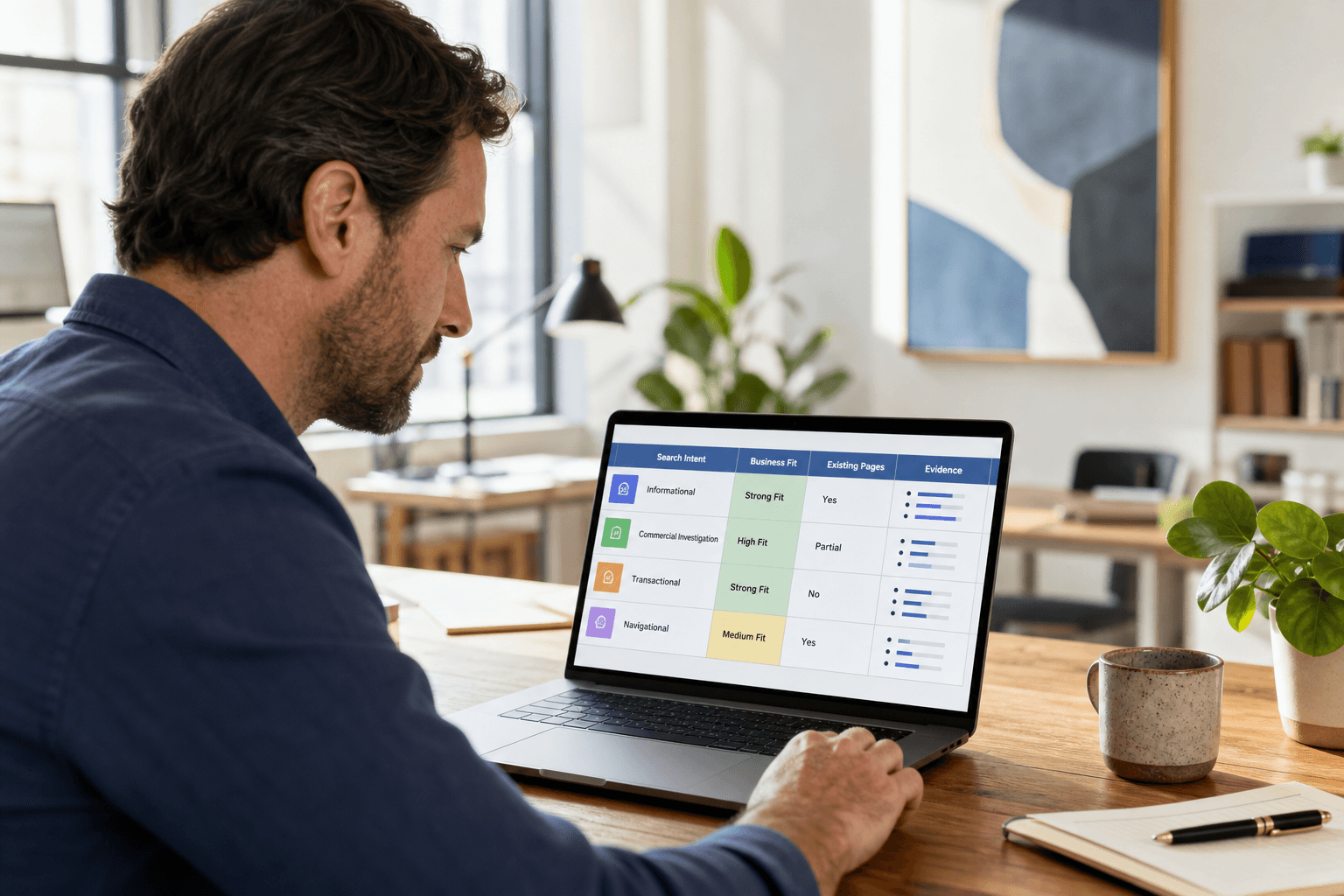
- Document intent for each subtopic (informational vs. commercial) to guide CTAs and internal links.
2) Design the information architecture#
- Publish one pillar URL with hub copy, FAQs, and clear CTAs.
- Have each cluster post link up to the pillar and sideways to 2–3 siblings using varied, descriptive anchors.
- Expose the pillar in navigation; keep posts in a consistent folder path for crawlability.
3) Create briefs that align to intent#
- Include target query, entities, questions, internal link targets, and example snippets.
- Apply local angles where relevant (service areas, landmarks, seasonality).
- Set a distinct CTA per post (book, call, download, subscribe) that matches search intent.
4) Publish fast, then iterate#
- Ship weekly to reach “cluster critical mass” in 4–6 weeks.
- Track pillar clicks and average position; tighten internal links where decay appears.
- Refresh posts with updated images, FAQs, and schema to maintain recency.

Reusable brief template (copy/paste)#
Title: <Working title with benefit or question>
Target Query: <Primary keyword>
Search Intent: <Informational / Commercial>
Entities to Cover: <List 8–12 terms>
People Also Ask: <3–5 questions>
Internal Links: <Pillar + 2–3 siblings with anchors>
External Source(s): <1–2 authoritative references>
Media: <Image concept or short video idea>
CTA: <Action aligned to intent>
Schema: <Article, FAQ, HowTo, Product, etc.>
Troubleshooting: Fix What’s Holding Your Cluster Back#
- Symptom: Pillar ranks but posts don’t. Likely cause: Orphaned posts or weak sideways links. Fix: Add 2–3 contextual sibling links per post and ensure a clear link up to the pillar.
- Symptom: Crawl budget wasted on thin pages. Likely cause: Overlapping subtopics. Fix: Consolidate and 301 to the strongest URL; refactor anchors to point there.
- Symptom: Good impressions, low clicks. Likely cause: Titles and metas misaligned to intent. Fix: Rewrite with benefit- or question-led framing; add FAQs.
- Symptom: Local pages don’t lift. Likely cause: Weak E‑E‑A‑T signals. Fix: Add original photos, author bios, NAP consistency, and Business Profile posts.
- Symptom: AI assistants ignore you. Likely cause: Missing facts and structure. Fix: Add concise definitions, stat ranges, quotes, and clean headings.
- Symptom: Link rot after 3–6 months. Likely cause: No process to maintain links. Fix: Use an autonomous linking engine or schedule quarterly sweeps.
How to Choose the Right Stack#
Match tools to your team’s time and outcomes:
- Hands-off execution needed: Choose an execution engine that researches, writes, interlinks, and publishes (ideal for small teams).
- Writers but no process: Pick research + brief tools and enforce SOPs for anchors, internal links, and refresh cadence.
- Local-first growth: Prefer stacks that update Google Business Profile and support location pages and seasonal content.
- AI search visibility: Ensure your stack structures content for AI citation preferences (definitions, sources, clean markup).
Buying Guide (Checklist)#
- Does it support topic clustering for SEO strategy end-to-end (research → writing → linking → publishing)?
- How are internal links mapped, inserted, and maintained over time?
- Can it post directly to WordPress/Webflow/Shopify/Framer with schema and images?
- Does it use Google Search Console data to expand or prune clusters?
- Does it add FAQs and HowTo schema when relevant?
- Does it include local SEO signals and Business Profile updates?
- How does it encourage AI citations and sourceability?
- What reporting highlights cluster health (impressions, CTR, link density, conversions)?
Use Cases: Real-World Cluster Blueprints#
Local service example: Commercial cleaning#
- Pillar: Commercial cleaning services (conversion hub).
- Subtopics: Office sanitization checklist, carpet care, floor waxing vs. polishing, post-construction cleanup, janitorial RFP guide.
- Local modifiers: “Near me,” facility types, seasonal flu spikes.
- Outcome: Map-pack stability and steady lead flow as internal links mature.
Ecommerce example: Landscaping supplies#
- Pillar: Mulch and soil delivery.
- Subtopics: Cedar vs. hardwood mulch, yardage calculator, raised-bed soil mix, spring prep, delivery timelines.
- Outcome: Informational posts link to product pages, raising add-to-cart rates.
Professional services example: Real estate#
- Pillar: First-time homebuyer guides.
- Subtopics: Closing timeline, fixed vs. variable mortgage, HOA pros/cons, inspection checklist, school district research.
- Outcome: More qualified consultations from top-of-funnel queries.
On-Page Optimization for Cluster Success#
- Headings: Use H2/H3 to reflect entities and People Also Ask questions.
- Anchors: Keep anchors descriptive (3–5 words) and vary phrasing to avoid footprints.
- Media: Add images or short videos to reduce pogo-sticking and improve dwell time.
- Schema: Always include Article and FAQ; add HowTo, Product, or LocalBusiness where relevant.
- UX: Favor short paragraphs and bullet lists; 2–3 sentences per paragraph.
Measurement: Know When Your Cluster Is Working#
- Leading indicators (2–6 weeks): Impressions rise on the pillar and 3–5 subtopics; crawl rate increases.
- Main outcomes (6–12 weeks): Non-branded clicks, deeper sessions, and conversions from cluster-aligned CTAs.
- Ongoing maintenance: Consolidate overlaps, refresh winners quarterly, and add 2–3 new subtopics per month.
Pro Tips: Make Clusters AI-Answer Friendly#
- Concise definitions: Lead sections with short, unambiguous explanations.
- Evidence snippets: Add stat ranges and cite sources where appropriate.
- Direct answers: Use callouts that answer a question in 2–3 sentences.
- Sourceability: Use clear headings, bullets, and neat HTML so answers are easy to cite.
- Automation: An execution engine ensures consistent formatting and schema, see our blog examples.
FAQ#
How many posts make a solid cluster?
Start with one pillar and 8–12 supporting posts. That’s usually enough to prove intent coverage and earn internal link equity. Expand with data after the first results window.
Should every cluster include location pages?
Include them if you serve multiple areas. Interlink service area pages to the pillar and to 2–3 relevant how-tos or comparisons to solidify local intent.
How long before clusters impact rankings?
Many teams notice leading indicators within a month as internal links tighten, with more significant gains typically arriving in the 6–12 week range.
What’s the difference between pillar pages and category pages?
A pillar is a conversion-focused hub for a single topic. A category is a navigational grouping. Use both, but have posts point to the pillar to consolidate equity.
Do I need a dedicated tool for internal linking?
No, but it helps at scale. Consistency and link hygiene matter; an autonomous engine prevents link rot as calendars grow.
Methodology#
- We analyzed eight top-ranking clustering guides (2026) and added missing sections: prerequisites and a deep troubleshooting checklist.
- We weighted automation, internal linking, AI search readiness, and CMS integrations higher for SMBs and local service teams.
- We prioritized stacks that reduce manual effort and sustain a weekly publishing cadence.
- We aligned recommendations with UpliftAI’s real capabilities: topic clusters, internal linking engine, Search Console integration, automated publishing, and local SEO support.
Conclusion#
- Topic clustering for SEO strategy turns scattered posts into a structured authority signal for Google and AI assistants.
- UpliftAI removes the heavy lifting, research, writing, linking, publishing, so clusters compound while you run the business.
- Pick a stack that fits your team, enforce simple anchor and linking rules, and publish weekly to reach critical mass.
- Track impressions, link density, and conversions; refresh winners; expand based on Search Console data.
Key Takeaways#
- One pillar + 8–12 posts is a strong starting point for a focused cluster.
- Internal links make or break clusters, maintain them as you publish.
- Local cues and structured facts help with both Google and AI citations.
- Automation sustains cadence, which sustains authority.
Ready to operationalize clusters? See how UpliftAI’s agents research, draft, optimize, interlink, and publish to your CMS, hands-free. Explore the Multi‑Agent SEO Brain or check our case studies. When you’re set, start your content engine from the blog and keep momentum going.