

On this page
- Overview
- What Content Marketing and SEO Actually Do Together (and Where Most SMBs Fail)
- The Traditional Workflow vs the AI-Automated Workflow
- How to Build a Content Marketing + SEO System That Runs Itself (Step-by-Step)
- The Pieces Most Guides Skip: Internal Linking, Topic Clusters, and Search Console Feedback Loops
- Where AI Search Visibility (GEO + ChatGPT Ranking) Changes the Game in 2026
- How UpliftAI Automates the Full Stack vs Doing It Tool-by-Tool
- FAQ
- Key Takeaways
Content marketing and search engine optimization is the disciplined pairing of audience-first content with on-page structure so the right people can find, trust, and act on it. Together they capture demand, earn authority, and generate leads. UpliftAI unifies this workflow so results grow while your team stays focused on the business.
By UpliftAI · Last updated: 2026-07-13
- Overview
- What they do together
- Traditional vs AI workflow
- Build a self-running system (steps)
- Internal links, clusters, GSC loops
- AI search visibility in 2026
- UpliftAI vs tool-by-tool
- FAQ
Overview#
Content marketing and SEO align when each article answers real demand, matches intent, and fits a linked cluster. The durable approach follows one rhythm: research → write → optimize → publish → interlink → measure → refresh. UpliftAI executes these steps across WordPress, Webflow, Shopify, and Framer with Google Search Console feedback guiding improvements.
You shipped a handful of posts and saw little traction. Competitors now outrank you for queries that describe your services. Juggling a keyword tool, GSC, and your CMS at midnight isn’t sustainable. This guide shows the exact system we use to stop that spiral and build compounding momentum.
What Content Marketing and SEO Actually Do Together (and Where Most SMBs Fail)#
Content marketing educates and earns trust; SEO structures and signals that trust so search engines and AI answers can surface it. Most SMBs fall short by publishing sporadically, skipping internal links, and never updating posts after Search Console reveals near‑miss opportunities.
- Two roles, one goal. Content answers the question; SEO makes that answer easy to discover and easy to cite.
- Typical breakdowns. Irregular cadence, thin topics, orphaned pages, and no refresh cycle once impressions stall.
- Repair plan. Map service-led topic clusters, add descriptive internal anchors, and refresh content using live query patterns.
- Proof that scales. UpliftAI supports 150+ languages and powers publishing for 1,000+ business owners, consistency wins.
We often meet teams who posted for three months, then watched traffic flatline. In their GSC data we see impressions for terms they care about, but clicks languish. That “near‑miss” pattern is exactly why a scheduled refresh loop and stronger internal links matter.
The Traditional Workflow vs the AI-Automated Workflow#
Manual content + SEO requires many handoffs and tools. An AI-automated workflow delivers one pipeline: demand research, strategy brief, drafted article with schema and media, on‑page optimization, internal links, CMS publishing, and scheduled refreshes, so output and quality stay consistent.
| Stage | Traditional team/tools | AI‑automated (UpliftAI) | What you see |
|---|---|---|---|
| Demand research | Keyword tool + spreadsheets | AI-powered discovery + topic clustering | A dashboard list with query, intent, volume, difficulty, and parent topic. |
| Strategy brief | Manual docs, revisions | Strategist agent creates structured briefs | H2/H3 outline, questions to answer, internal link targets, schema plan. |
| Drafting | Writer handoff | Writer agent produces drafts | Readable copy with headings, images, alt text, and snippet-ready summaries. |
| On-page optimization | Separate plugin | Optimizer agent tunes elements | SEO title, meta description, headings, image compression, and structured data. |
| Internal linking | Manual pass | Internal Linking Engine | Anchors that route to pillar pages and related posts; no orphans. |
| Publishing | Copy/paste to CMS | Direct CMS integrations | Published post with images and schema, no formatting clean‑up needed. |
| Measurement | Logins across tools | Search Console integration | Queries, impressions, CTR, and position organize your next edits. |
| Refresh cycle | Ad hoc | Scheduled updates | Queued improvements and unlimited AI rewrites based on live signals. |
If you want a deeper walkthrough of automation mechanics, skim this SEO content automation guide that outlines repeatable standards for titles, summaries, and schema.
How to Build a Content Marketing + SEO System That Runs Itself (Step-by-Step)#
Connect Search Console, map clusters to your services, standardize briefs, and automate drafting, optimization, and publishing. Then maintain internal links and refresh based on query shifts. This creates a reliable engine that compounds rankings and leads without micromanagement.
- Authorize data. Connect Google Search Console so real queries guide both new topics and refresh priorities.
- Define clusters. Tie each core service to a pillar page and 6–10 supporting posts covering sub‑questions.
- Lock a brief template. Include target intent, outline, FAQs, internal link targets, and speakable snippets.
- Automate drafting + on‑page. Generate drafts with headings, alt text, schema, and optimized meta. See the how‑to on automating SEO content creation for checklist details.
- Publish via CMS integrations. Push directly to WordPress, Webflow, Shopify, or Framer, no copy/paste errors.
- Activate internal linking. Maintain descriptive anchors between pillars and support posts; prevent orphans.
- Refresh on signal. Expand intros, adjust titles, and add missing sections where impressions outpace clicks.
- Support local discovery. Keep Google Business Profile posts aligned with your clusters to reinforce expertise.
The Pieces Most Guides Skip: Internal Linking, Topic Clusters, and Search Console Feedback Loops#
Internal links concentrate authority, clusters prove depth, and Search Console reveals near‑misses. Automating these three elements turns one strong post into a gateway for many, improves crawl efficiency, and helps new pages rank faster.
- Internal links that guide. Use natural anchors that describe the destination. Route to pillars and relevant how‑tos.
- Clusters that signal expertise. Cover breadth and depth around each service so crawlers and readers see the whole picture.
- Feedback that drives edits. Impressions without clicks often mean weak titles or buried answers, fix those first.
- Automation that preserves gains. Keep anchors current as new content ships; schedule refreshes after notable query shifts.
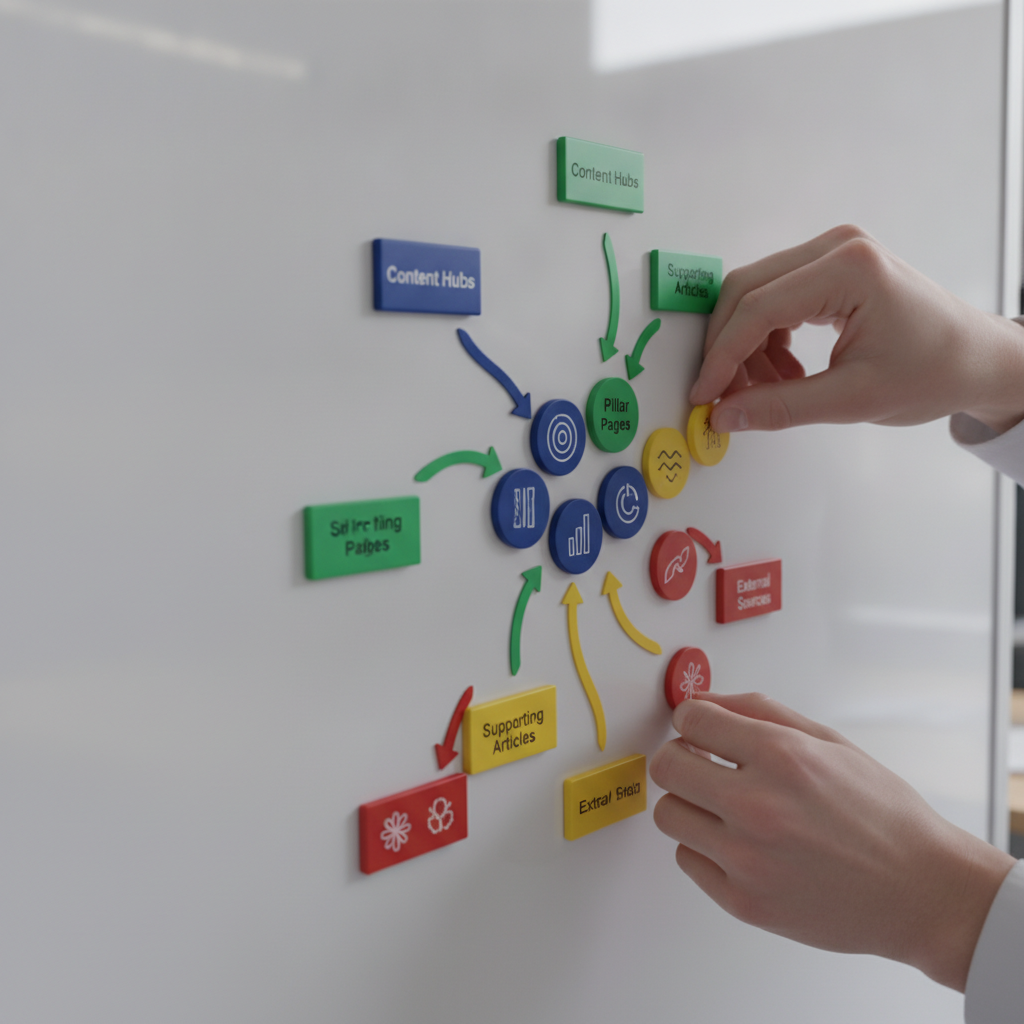
For examples of clusters lifting rankings across dozens of posts, browse our case studies and compare before/after interlinking maps.
Where AI Search Visibility (GEO + ChatGPT Ranking) Changes the Game in 2026#
AI assistants favor sources with concise definitions, extractable summaries, and clean structure. Design openings and FAQs to be quotable, add schema, and keep pages fresh. Active local signals from your Business Profile also reinforce trust for service‑led queries.
- Lead with definitions. Open every article with a 40–60 word answer and the target term in the first 100 words.
- Make it speakable. Include snippet‑style summaries and short FAQ answers that a voice assistant can read verbatim.
- Keep structure clean. Use headings, lists, and schema. Long walls of text underperform in AI summaries.
- Refresh rhythm. Update when queries or CTR shift, not just by calendar, that’s what AI surfaces as “most helpful now.”
Patterns that support this approach are outlined in our overview on AI‑powered SEO content automation.
How UpliftAI Automates the Full Stack vs Doing It Tool-by-Tool#
Most platforms diagnose. UpliftAI executes. It plans topics, drafts posts, optimizes on‑page elements, builds internal links, adds schema and images, publishes to your CMS, schedules refreshes, supports Google Business Profile posts, and runs an automated backlink network.
- From connection to output. Connect your CMS and Search Console. Approve the cluster map. Receive drafted posts with internal links pre‑wired, ready to publish.
- Internal Linking Engine. Autonomously maintains connections across pillars and new articles so authority flows to priority pages.
- Search Console integration. Live queries set refresh queues and highlight strike‑zone topics you nearly win.
- Competitor context. Tools like Surfer SEO, Jasper, Frase, MarketMuse, and Scalenut can assist analysis; UpliftAI completes the work, end‑to‑end.
- Our stance for 2026. Quality beats sheer volume once you publish weekly. Schema is table stakes; internal linking and refresh discipline move rankings faster.

Outcome: a dependable, hands‑free engine for content marketing and search engine optimization that strengthens Google rankings and increases the odds of being cited by AI assistants.
FAQ#
What’s the difference between content marketing and SEO?#
Content marketing creates useful resources that attract and educate your audience. SEO ensures those resources are easy to discover and trust by optimizing structure, metadata, internal links, and technical basics. Treat them as one process aligned to service‑led topic clusters.
How often should small teams publish?#
Pick a weekly or biweekly cadence you can sustain for six months. Consistency builds crawl frequency and topical authority. Use automation to keep standards high and rely on Search Console to decide what to refresh or expand next.
Do backlinks still matter in 2026?#
Yes, authoritative backlinks remain a signal. Strong internal links and high‑quality content reduce the number you need, but a steady stream of relevant, safe links paired with on‑page quality drives more defensible rankings.
How does internal linking improve rankings?#
Descriptive anchors help search engines understand relationships between pages and direct authority to priority URLs. A tight cluster around each service makes crawling efficient and helps new or updated pages get indexed and ranked faster.
What does UpliftAI actually produce?#
You’ll see a service‑aligned cluster map, structured briefs, drafted articles with headings and schema, optimized titles and descriptions, internal links between pillars and posts, direct CMS publishing, Google Business Profile posts, and a refresh queue driven by Search Console data.
Key Takeaways#
- Run content and SEO as one pipeline, from demand research to scheduled refreshes.
- Map clusters to services, link pillars to posts, and update when queries shift.
- Design every article for extraction: definitional opening, snippet, schema, FAQs.
- After a steady weekly cadence, quality and refresh discipline outperform volume.
- UpliftAI executes the full stack while your team focuses on delivery and sales.
About UpliftAI: UpliftAI is an AI-powered SEO execution engine used by 1,000+ business owners. Its Multi‑Agent SEO Brain researches, writes, optimizes, interlinks, and publishes across major CMS platforms, while Google Search Console signals drive the roadmap.