

On this page
- Quick Summary
- What Is Google Ranking?
- Why Google Ranking Matters
- How Google Ranking Works
- Types, Methods, and Approaches
- Step-by-Step Playbook to Climb the Rankings
- Best Practices for 2026
- Tools and Resources We Recommend
- How UpliftAI Accelerates Google Ranking
- Google Ranking and AI Search (ChatGPT, Claude, Perplexity)
- Checklist and Process Table
- Mini Case Studies and Real-World Examples
- Common Pitfalls and Fast Fixes
- Get Hands-Free Execution
- Frequently Asked Questions
- Conclusion and Next Steps
Google ranking is the order your pages appear in Google’s results for a given search. Higher positions drive more impressions and clicks, which means more leads for local businesses in your area. To improve Google ranking, focus on helpful content, technical quality, local signals, internal links, and steady publishing.
By UpliftAI • Last updated: May 25, 2026
Quick Summary#
Boost Google ranking by pairing helpful, structured content with clean technical foundations, consistent internal linking, and local trust signals. Ship weekly updates, track Search Console queries, and earn quality mentions. This 2026-ready playbook shows exactly what to fix, publish, and measure for predictable gains.
Here’s the high-level plan we use when helping small and medium-sized businesses with hands-free SEO execution:
- Publish audience-first articles mapped to real queries and intent.
- Harden technical basics: fast load, mobile-first layout, structured data.
- Strengthen local trust: accurate profiles, reviews, and citations.
- Weave topic clusters with smart internal linking and clear anchors.
- Monitor queries and pages in Search Console; iterate weekly.
What Is Google Ranking?#
Google ranking refers to the relative position of a webpage in Google’s search results for a specific query. It’s determined by signals like relevance, quality, experience, authority, and technical health. Higher rankings typically deliver more clicks, amplifying discovery, leads, and revenue for local and national businesses.
In plain terms, ranking is Google’s “best match” ordering. The more your page demonstrates relevance and reliability, the higher it can appear. That reliability combines three pillars:
- Content signals: topical coverage, freshness, helpfulness, and unique value.
- Experience signals: fast pages, mobile usability, visual stability, and safe browsing.
- Authority signals: internal link structure, external mentions, brand queries, and reviews.
For UpliftAI customers, our Multi-Agent SEO Brain operationalizes those pillars automatically, researching topics, writing content, optimizing on-page elements, and publishing on a reliable cadence so your footprint (and rankings) grow steadily.
Why Google Ranking Matters#
Ranking matters because search clicks concentrate at the top. Visibility fuels brand discovery, lead volume, and compounding growth. When you consistently win page-one spots for intent-aligned queries, you attract buyers at the exact moment they’re searching for what you offer.
Three outcomes we see when rankings rise:
- Compounding discoverability: each new page that ranks opens additional internal link paths to boost related pages.
- Higher qualified traffic: visitors arrive with specific problems and conversion intent.
- Defensible advantage: structured content, schema, and interlinking create moats that are hard to replicate quickly.
Here’s the thing: you don’t need hundreds of pages to see results. Many local businesses start noticing meaningful lifts once 8–12 high-intent pages are live, interlinked, and supported by a healthy Google Business Profile.
How Google Ranking Works#
Google ranking systems evaluate how well a page answers a query using signals like meaning, relevance, quality, experience, and context. Pages with clear intent alignment, helpful coverage, strong E-E-A-T cues, and sound technical delivery tend to rank more reliably across updates.
At a practical level, four layers influence outcomes:
- Query understanding: Google interprets intent (informational, transactional, local) and synonyms.
- Document relevance: headings, copy depth, multimedia, and schema convey meaning.
- Experience: speed, mobile layout, image optimization, and visual stability support usability.
- Authority and trust: internal links pass context; reputable mentions and reviews validate credibility.
In our experience, the quickest wins come from clarifying intent and cleaning on-page structure: a clear H1, logical H2s with answer-first summaries, tight meta tags, descriptive alt text, and purposeful anchor text. Those basics move the needle before you even earn new backlinks.
Types, Methods, and Approaches#
To improve Google ranking in 2026, blend on-page optimization, technical hardening, local SEO signals, strategic internal linking, and selective link earning. Organize content into topic clusters and prioritize pages that align with revenue-driving queries and buyer intent.
On-page content fundamentals#
- Answer early: lead sections with 40–60 word answers (like the one above).
- Structure clearly: one H1, scannable H2/H3s, and short paragraphs.
- Semantic coverage: expand with FAQs, definitions, and examples that match user language.
- Media support: add compressed images with descriptive alt text to reinforce context.
Technical health#
- Mobile-first: design for small screens and touch interactions from the start.
- Speed targets: optimize images, defer non-critical scripts, and use caching/CDN.
- Structured data: add Article, FAQ, Product/Service, and LocalBusiness schema where relevant.
- Index hygiene: fix broken links, canonicalize duplicates, and use robots.txt thoughtfully.
Local SEO signals#
- Accurate profiles: maintain consistent NAP (name, address, phone) everywhere you’re listed.
- Reviews: request and respond; reference services and locations naturally.
- Photos and posts: keep your profile fresh with new media and seasonal updates.
- Citations: ensure top directories list you correctly to reinforce trust.
Internal linking and clusters#
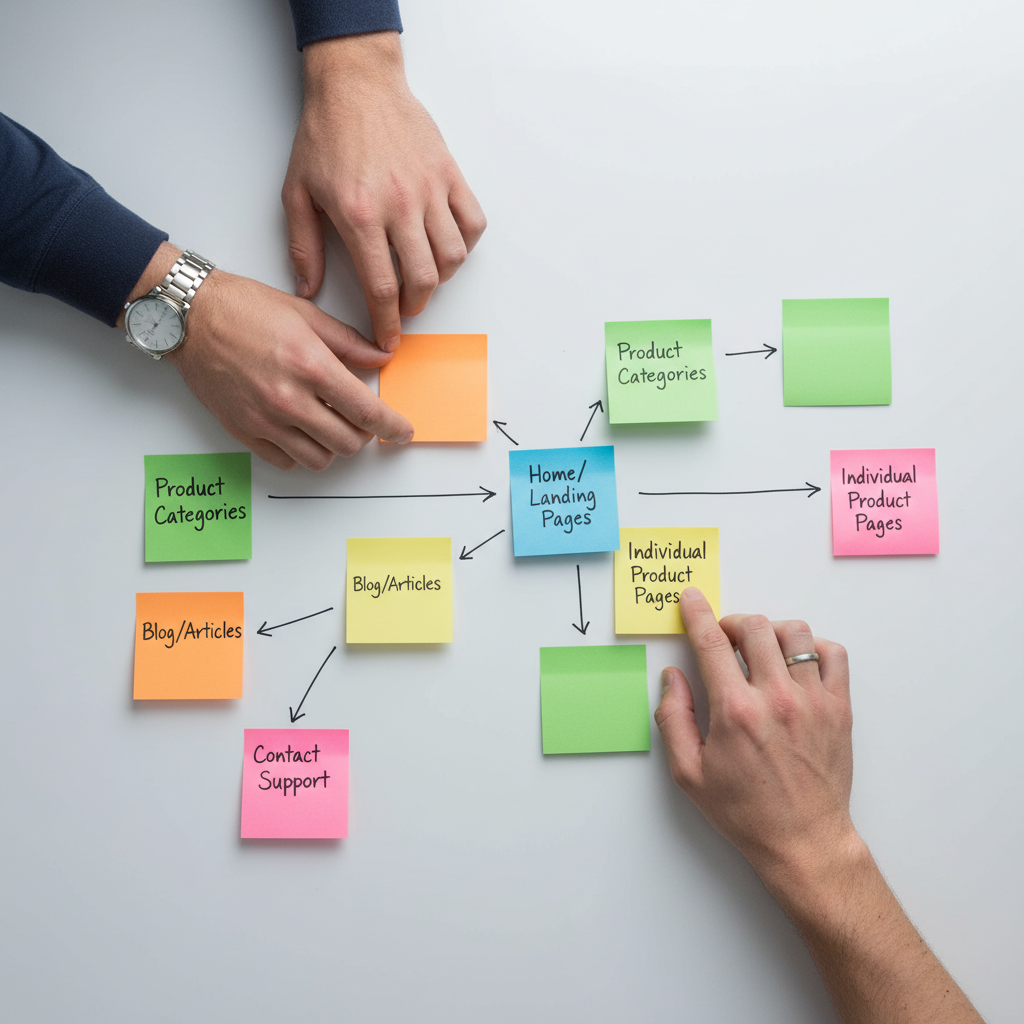
- Pillars and spokes: create an authoritative pillar (e.g., your core service) and link out to focused subtopics.
- Descriptive anchors: 3–5 word anchors beat generic “learn more.”
- Nav and breadcrumbs: give users and crawlers clear paths and context.
- Update cadence: revisit links as new content ships; clusters evolve.
Selective link earning#
- Publish cite-worthy assets: data roundups, checklists, and templates draw natural mentions.
- Partners and vendors: secure “featured provider” mentions where relevant.
- Community involvement: events and associations produce durable local links.
Step-by-Step Playbook to Climb the Rankings#
Map your target queries, publish one high-intent page per week, interlink new posts into clusters, and tighten technical basics monthly. Track impressions, clicks, and average position in Search Console. Iterate titles, intros, and internal links until you see steady lifts.
- Clarify buyer intent
- List 20–40 questions real buyers ask before they call or book.
- Group into 4–6 topic clusters (e.g., services, comparisons, how-tos, local).
- Prioritize terms with clear commercial or local intent.
- Draft answer-first outlines
- Open each H2 with a 40–60 word summary that fully answers the subtopic.
- Use 3–5 bullet points under each to improve scan depth and snippet odds.
- Add one practical example per section; real scenarios win trust.
- Ship one page weekly
- Pick a consistent day and time; recency helps Google crawl predictably.
- Embed structured data (Article + FAQ); validate after publishing.
- Repurpose the post into 2–3 short social blurbs to spark visits and links.
- Interlink with intent
- From each new post, link to the pillar and 2–3 related spokes.
- Use descriptive, human anchors like “local SEO checklist” instead of “click here.”
- Backfill older posts to link forward into the new content.
- Harden the technical layer monthly
- Compress images, lazy-load below-the-fold, preload key fonts.
- Audit 404s, redirects, and canonical tags; keep crawl paths clean.
- Check mobile tap targets and CLS (layout shifts) after theme/plugin updates.
- Measure, iterate, and expand
- In Search Console, monitor queries, CTR, and average position by page.
- Refresh top performers quarterly with new FAQs and internal links.
- Update titles and introductions to align with rising query patterns.
Want this on autopilot? Our SEO agent discovers keywords, writes posts, optimizes entities and schema, and publishes to your CMS, while also keeping your Google Business Profile active.
Best Practices for 2026#
Prioritize helpful content with clear intent, clean technical delivery, and trustworthy signals. Use answer-first sections, structured data, tight internal links, and frequent updates. Keep pages fast, mobile-friendly, and visually stable. Expand clusters and refresh winners quarterly for durable gains.
- Write for decisions, not keywords: solve a job-to-be-done; keywords follow.
- Embrace short intros: get to the point in 2–3 sentences max.
- Embed speakable snippets: concise answers boost voice and AI citations.
- Use FAQs strategically: 3–5 crisp Q&As capture long-tail intent.
- Refresh top pages: add 1–2 examples, current-year tips, and new internal links.
Local considerations for your area#
- Seasonality matters: plan content around local peaks (holidays, weather shifts, school terms) that affect search demand.
- Service radius clarity: list neighborhoods or metro areas you serve and reinforce them across pages and profiles.
- Operational nuance: publish posts answering location-specific rules, permits, or timelines relevant to your services.
Tools and Resources We Recommend#
Use a small tool stack: your CMS, Google Search Console for query insights, and an execution engine to research, write, optimize, and publish consistently. Keep it simple so you can sustain weekly output without adding manual overhead.
UpliftAI is built to remove busywork so you can focus on your business:
- Multi-Agent SEO Brain: Researcher → Strategist → Writer → Optimizer → Publisher.
- Automated publishing: WordPress, Webflow, Shopify, and Framer integrations.
- Local SEO support: Google Business Profile posts and profile activity.
- Internal linking engine: autonomous weaving across clusters.
- Backlink automation: intelligent network outreach for durable mentions.
For hands-on checklists and diagnostics, this practical on-page SEO checklist can help you spot common gaps quickly. To see how we implement these systems in the wild, explore our customer case studies.
How UpliftAI Accelerates Google Ranking#
UpliftAI turns ranking strategy into execution. It discovers keywords, drafts outlines, writes and optimizes content, embeds schema and images, builds internal links, and publishes on a schedule, while keeping your Google Business Profile active for local visibility.
- Keyword discovery to topic clusters: align clusters to services and buyer stages.
- Answer-first writing: every section opens with a 40–60 word snippet for AEO.
- On-page optimization: titles, meta data, alt text, headings, and entities.
- Internal links: autonomous weaving to spread authority and context.
- Backlink building: smart outreach to strengthen high-value pages.
If you prefer to review the agent’s work, you can request unlimited AI rewrites and improvements, then one-click publish. The result: a steady stream of pages that align to measured demand and lift portfolio-wide rankings over time.
Google Ranking and AI Search (ChatGPT, Claude, Perplexity)#
Search engines and AI answers reward the same traits: clear definitions, direct answers, credible structure, and up-to-date examples. Write quotable intros, add speakable snippets, and include concise FAQs. Strong pages can earn both Google positions and AI citations.
- Definition-first intros: give AI a clean, citable explanation in the first 2–3 sentences.
- Speakable sections: short, declarative summaries under each H2.
- Named structure: use schema so AIs can parse sections confidently.
- Examples matter: fresh scenarios improve usefulness and citation odds.
Our platform bakes in AI citation optimization, structuring content with answer-first blocks, schema, and FAQs, so your pages are primed for both organic listings and answer engines.
Checklist and Process Table#
Use this table to sequence your work. It pairs ranking levers with concrete actions and review cadences so you can operationalize improvements without guesswork or tool sprawl.
| Ranking lever | What to do | Owner | Cadence |
|---|---|---|---|
| Query mapping | Group terms into clusters by intent and service | Strategist/Agent | Quarterly |
| Content shipping | Publish one high-intent page with FAQs | Writer/Agent | Weekly |
| On-page cleanup | Titles, meta, H2s, alt text, internal links | Optimizer/Agent | Weekly |
| Technical health | Speed, mobile UI, schema validation | Optimizer/Dev | Monthly |
| Local signals | Photos, posts, reviews, citations | Ops/Agent | Weekly |
| Performance review | Search Console queries, CTR, positions | Strategist/Agent | Biweekly |
Mini Case Studies and Real-World Examples#
When pages answer real buyer questions, rankings follow. These brief examples mirror how local businesses use clusters, internal links, and profile activity to capture intent and convert searchers into bookings.
- Food service: A caterer builds a “Menu + Service Area” pillar, adds seasonal menu posts, and interlinks to FAQs about dietary options. Profile photos and event posts reinforce freshness and locality.
- Commercial cleaning: A janitorial company ships cluster pages on “office cleaning,” “disinfection,” and “move-out cleaning.” Each page links to a scheduling page and a concise checklist download.
- Landscaping: A regional team organizes clusters by service (sod, hardscaping, maintenance) and season (spring/fall). Before/after galleries with alt text increase relevance and clicks.
- Real estate: An agent publishes neighborhood guides, listing prep checklists, and “buy vs. rent” explainers, then interlinks them into a decision-support hub.
- Event venues: A venue creates capacity and layout guides, vendor lists, and parking FAQs. Photos and updated calendars signal reliability to both users and crawlers.
All of these follow the same playbook: answer-first sections, purposeful internal links, and consistent updates. To see how our automation orchestrates this at scale, visit the UpliftAI case studies page.
Common Pitfalls and Fast Fixes#
Thin intros, buried answers, slow media, and orphan pages suppress rankings. Fix by leading with definitions, compressing images, adding descriptive anchors, and linking every new post into a cluster with 3–5 internal references.
- Problem: Walls of text and no clear answers. Fix: Answer-first blocks and H2s with summaries.
- Problem: Slow hero images. Fix: Compress, use modern formats, and lazy-load below the fold.
- Problem: Isolated posts. Fix: Link into a pillar and at least two spokes.
- Problem: Outdated pages. Fix: Quarterly refreshes with new FAQs and internal links.
Get Hands-Free Execution#
Skip the manual grind. UpliftAI discovers keywords, writes, optimizes, and publishes content, while maintaining your profile and internal links. You get consistent output and measurable lifts without adding headcount or juggling tools.
Ready to see a working demo of our multi-agent workflow? Explore the SEO agent, skim recent wins on our case studies page, or start now and let us handle the execution.
Frequently Asked Questions#
These concise answers address the most common ranking questions we hear from local businesses and SMB teams. They’re designed for quick scanning and voice answers.
What is the fastest way to improve Google ranking?#
Lead each page with a direct answer, clean up titles and H2s, compress images, and add 3–5 smart internal links. Then publish one helpful page per week and monitor Search Console for query shifts. Those steps often produce early, visible movement.
How important is page speed for ranking?#
Speed supports better user experience and higher engagement, which correlates with stronger rankings. Keep media optimized, defer non-critical scripts, and test mobile performance regularly. Faster sites tend to earn and hold positions more reliably over time.
Do I need backlinks to rank locally?#
Quality content and internal links can take you far, especially for local intent. However, a handful of relevant, trustworthy mentions, partners, associations, community sites, can meaningfully strengthen competitive pages and improve map and organic visibility.
How often should I update content?#
Publish weekly and refresh top performers quarterly. Add recent examples, clarify intros, expand FAQs, and retune internal links. The cadence keeps crawlers returning and helps your pages align with evolving queries.
Conclusion and Next Steps#
Improving Google ranking is a system, not a one-off task. Ship helpful, structured content every week, keep the site fast and stable, strengthen local trust signals, and refine internal links. Measured consistently, these habits produce durable gains.
Key takeaways#
- Lead with direct, citable answers under each H2.
- Use clusters and internal links to concentrate relevance.
- Protect mobile speed and visual stability as you grow.
- Refresh winners quarterly; expand clusters monthly.
- Use automation to sustain cadence and quality.
Want this playbook executed for you? Visit the UpliftAI platform, learn about our SEO agent, browse case studies, and get started in minutes. Consistent publishing and smart linking add up fast.