

On this page
- Quick Summary
- What’s Inside (Table of Contents)
- What Is Local SEO?
- Why Local SEO Matters in 2026
- Local SEO Optimization Guide: How It Works
- Types, Methods, and Approaches
- Best Practices That Move the Needle
- Tools and Resources (automation-forward)
- Step-by-Step Checklist (30 days)
- Case Studies and 12 Real-World Examples
- FAQ
- Manual vs Automated: Process Comparison
- Key Takeaways
- Related Topics
- Conclusion and Next Steps
Struggling to show up where your best customers actually search, on Google Maps, the local pack, and even in AI answers? This local SEO optimization guide is a complete, practical playbook for small business owners and lean marketing teams who want more calls, bookings, and foot traffic without relying on paid ads.
- What you’ll learn: how local search works in 2026 (Google + AI), the ranking signals you control, and a 30-day plan you can actually finish.
- Who this is for: local service providers and SMB teams using WordPress, Webflow, Shopify, Framer, or other CMS platforms.
- Why trust this guide: UpliftAI is an AI-powered SEO execution engine, our Multi-Agent SEO Brain researches, writes, optimizes, and publishes content automatically while keeping your Google Business Profile active and building authority.
Quick Summary#
- Maintain Google Business Profile (GBP) weekly, fresh photos, posts, services, Q&A.
- Fix NAP (name, address, phone) everywhere and align categories across directories.
- Publish helpful, location-focused pages and interlink into topic hubs.
- Request reviews after every job; reply with empathy and location keywords.
- Use schema, media, and internal links to boost relevance and conversions.
- Automate recurring tasks so momentum doesn’t die after week two.
Quick Answer#
Follow a focused local SEO optimization guide: update your Google Business Profile weekly, publish locally relevant pages, earn and respond to reviews, and keep citations consistent. UpliftAI automates the execution so local businesses across the United States sustain visibility in the local pack and AI answers.
Local Tips#
- Tip 1: Reference well-known neighborhoods and landmarks customers use (for example, “near City Hall,” “off Main Street,” or “by the riverfront”) on location pages and GBP posts to mirror real search behavior.
- Tip 2: Plan seasonal content around local weather, school calendars, and holiday rush periods; search demand for services like landscaping, HVAC, and catering swings week by week.
- Tip 3: Keep hours, holiday updates, and service areas fresh on GBP. Inactive profiles slide behind active competitors even when ratings are similar.
IMPORTANT: These tips are tailored to local service providers and SMBs, exactly the audience UpliftAI’s execution engine supports.
What’s Inside (Table of Contents)#
- What Is Local SEO?
- Why Local SEO Matters in 2026
- Local SEO Optimization Guide: How It Works
- Types, Methods, and Approaches
- Best Practices That Move the Needle
- Tools and Resources (automation-forward)
- Step-by-Step Checklist (30 days)
- Case Studies and 12 Real-World Examples
- FAQ
- Manual vs Automated: Process Comparison
- Key Takeaways
- Related Topics
- Conclusion and Next Steps
What Is Local SEO?#
Local SEO is the process of making your business visible for nearby, intent-driven searches like “plumber near me,” “best pizza in town,” or “wedding venue downtown.” You’re optimizing two surfaces simultaneously: Google’s Map Pack/Maps and localized organic results, plus a growing third surface, AI answer engines that often cite high-quality local sources.
- Core elements you control:
- Google Business Profile completeness and activity
- On-page location signals (title tags, H1/H2s, schema, content)
- Citations (consistent NAP across trusted directories)
- Media quality (photos, short videos, before/after)
- Reviews (volume, keywords, responses)
- Internal linking that builds topical hubs
- Signals you influence:
- Proximity to the searcher (service area clarity helps discovery)
- Prominence (backlinks, local mentions, PR)
- Engagement (clicks, calls, directions, photo views)
- Content that works now:
- “Service in City” and “Neighborhood” pages with unique angles
- Project spotlights tied to real streets and districts
- FAQ sections that answer booking, timing, and preparation questions
- Media galleries that prove expertise (authentic beats stock)
Why it matters: Most local decisions now happen before anyone visits your website. GBPs, photos, star ratings, and quick Q&A shape purchase intent. A strong web presence plus an active profile wins more calls and bookings.
Why Local SEO Matters in 2026#
Local search behavior keeps shifting toward speed and certainty. People want fast, trustworthy options close by. That means your most important real estate is often a small card in the Map Pack and a few lines of descriptive text in organic or AI-driven answers.
- Zero-click decisions: Many customers decide from the Map Pack, your GBP must convert on its own.
- AI answer engines: Chat-style tools summarize options and cite sources; businesses with structured, authoritative content are more likely to be referenced.
- Mobile-first reality: Speed, clarity, and click-to-call matter as much as rankings.
- Local proof beats claims: Photos, reviews, and project spotlights show you do the work in the area the customer cares about.
For owners, the win shows up in calls, directions requests, messages, and appointments, signals you can monitor in GBP Insights and your analytics stack. Consistency is the multiplier, which is why execution automation is so valuable.
Local SEO Optimization Guide: How It Works#
Treat local SEO like a weekly operating system. You set the foundation once, then run a lightweight cadence to keep visibility climbing.
- Claim and complete GBP:
- Select accurate primary and secondary categories; add detailed services and service areas.
- Write a concise, benefit-led business description using natural local phrases.
- Upload authentic photos: exterior, interior, team, equipment, and before/after sets.
- Fix NAP everywhere:
- Make your name, address, and phone number identical across directories.
- Align categories and descriptions on top directories and industry associations.
- Publish local pages and hubs:
- Create “Service in City” and neighborhood pages with unique details and media.
- Build a hub page that links to each neighborhood and service variant.
- Add FAQ and LocalBusiness schema to strengthen eligibility for rich results.
- Collect and showcase reviews:
- Request a review after every completed job (SMS/email with direct link helps).
- Respond to all reviews; echo the service and area naturally in replies.
- Post weekly and refresh media:
- Publish GBP posts with seasonal hooks, promos, and project highlights.
- Rotate new photos monthly; authenticity and recency drive engagement.
- Strengthen internal links:
- Connect new blogs to service and location pages with descriptive anchors.
- Use breadcrumbs and hub-and-spoke architecture to concentrate relevance.
- Earn local backlinks and mentions:
- Sponsor community events; pitch local media and chambers of commerce.
- Publish spotlights on partner vendors and neighborhood guides.
- Track and iterate:
- Watch queries and clicks in Search Console; expand winners into clusters.
- Use GBP Insights to double down on content that triggers calls and directions.
Here’s the advantage of automation: UpliftAI’s execution engine keeps this cadence alive, researching topics, writing drafts, optimizing on-page elements, interlinking to hubs, adding schema, and publishing to your CMS, so results compound even on your busiest weeks. Explore the Multi-Agent SEO Brain on our agent overview to see how the Researcher, Strategist, Writer, Optimizer, and Publisher work together.
Types, Methods, and Approaches#
Local SEO isn’t one channel; it’s a stack of complementary methods. Layer them to increase relevance and prominence.
Foundational signals#
- GBP optimization: Categories, services, posts, photos, and Q&A activity.
- On-page relevance: Title tags, H1/H2s, alt text, schema, and body copy referencing neighborhoods and landmarks naturally.
- Citations: Authoritative directories with consistent NAP and categories.
Prominence builders#
- Backlinks: Local media, associations, events, and vendor features.
- Reviews: Volume, velocity, and keyword/context in reviews.
- Engagement: Clicks, calls, messages, and directions requests.
AI/answer engine readiness#
- AI citation optimization: Clear facts, expert tone, and structured data improve the likelihood of being cited by AI engines.
- Helpful formatting: Scannable lists, step-by-step sections, and concise definitions help answer engines parse your content.
- Source credibility: Real images, author bylines, and consistent publishing cadence support E-E-A-T signals.
If you need a foundational explainer, this beginner’s article offers useful context; pair it with the action plan in this guide to move faster, see this intro to local SEO basics for definitions before you dive into execution.
Best Practices That Move the Needle#
These practices combine what Google’s local algorithm values with what actual customers respond to. Prioritize them, and you’ll feel the lift in calls and bookings.
Google Business Profile hygiene#
- Add accurate primary and secondary categories; map each to real services.
- Complete services, service areas, attributes, and accessibility details.
- Publish weekly posts (offers, updates, and project spotlights) and answer Q&A.
- Upload authentic photos: storefront, team at work, fleet/gear, before/after.
- Keep hours and holiday closures current; stale profiles lose credibility.
Media and conversion UX#
- Use crisp images with descriptive file names and alt text; include neighborhood cues where natural.
- Make the phone number tap-to-call; add appointment links and short forms.
- Ensure speed and accessibility pass Core Web Vitals; compress images and lazy-load galleries.
- Place reviews and trust badges near CTAs; repeat the phone number in the footer.

Content hubs and internal links#
- Create a “Service in City” hub that links to neighborhood pages and FAQs.
- Interlink new blogs to service and location pages with descriptive anchor text.
- Add LocalBusiness, FAQ, and Product/Service schema to strengthen topicality.
- Use hub-and-spoke architecture to direct PageRank to conversion pages.
Reviews and reputation#
- Automate review requests post-service; make it easy with a direct link.
- Respond to all reviews, echo the service and area naturally (“Thanks for trusting our HVAC repair in West End”).
- Feature top reviews on your site (with permission) to improve conversion.
Backlinks and local mentions#
- Join local associations and chambers; seek member directories and spotlight features.
- Sponsor events and youth sports; request a website mention with a dofollow link.
- Publish partner spotlights and neighborhood guides that earn natural links.
For a deeper look at execution-first SEO, explore how our platform operationalizes these best practices across research, writing, optimization, interlinking, and publishing in the UpliftAI blog.
Tools and Resources (automation-forward)#
Most teams don’t lack know-how, they lack time. Tools that do the work for you preserve cadence, which is where rankings are won.
- UpliftAI execution engine: Researches keywords, clusters topics, writes drafts, optimizes on-page elements, interlinks, adds schema, and publishes directly to WordPress, Webflow, Shopify, and Framer. Learn about the Multi-Agent SEO Brain on our agent overview.
- Local features built-in: Google Business Profile activity, facts and citations enrichment, and an autonomous internal linking engine keep local signals fresh without manual effort.
- Backlink automation: Intelligent backlink generation prioritizes high-authority, relevant opportunities, growing domain credibility over time.
- Search Console-driven strategy: Uses real query and click data to expand content that already works, avoiding guesswork.
- Content enhancements: AI-generated images, relevant YouTube video embedding, and unlimited AI rewrites keep assets engaging and on-brand.
- Support: 24/7 assistance and a daily publishing cadence option help busy owners stay consistent.
Prefer to learn the basics first? Skim a beginner guide and then let an execution engine handle the heavy lifting so you never miss a week of publishing again.
Step-by-Step Checklist (30 days)#
Use this 4-week plan to build momentum fast. It’s realistic for busy teams and maps to how UpliftAI automates the workload.
- Week 1 – Foundation and auditing
- Claim/verify GBP; align categories, services, service areas, and attributes.
- Audit NAP across top directories; fix obvious inconsistencies.
- Capture baseline: impressions, calls, direction requests, and top queries.
- Draft one “Service in City” page with authentic photos and an FAQ section.
- Week 2 – Content and internal links
- Publish two location pages (unique angles, neighborhoods, and gallery).
- Interlink from the homepage, service hub, and at least three relevant blogs.
- Add LocalBusiness and FAQ schema; validate in Search Console.
- Post one GBP update with seasonal context and a clear CTA.
- Week 3 – Reviews and media
- Launch a review request workflow after every completed job.
- Reply to existing reviews; mirror service and area in natural language.
- Upload five new photos (team at work, before/after, storefront).
- Publish two blogs targeting near-term local intent (“emergency,” “same-day,” “open now”).
- Week 4 – Citations and mentions
- Add or correct five authoritative citations; align categories and descriptions.
- Secure one local mention/backlink (association, vendor, event site).
- Publish one project spotlight tied to a recognizable neighborhood or landmark.
- Review Search Console and GBP Insights; queue next month’s plan.
- Ongoing cadence: Weekly GBP posts, monthly hub expansion, quarterly photo refresh, and continuous internal linking.
Case Studies and 12 Real-World Examples#
These mini-scenarios reflect the industries UpliftAI supports most often. Each combines GBP activity, location content, reviews, and interlinking, then uses automation to keep it all consistent.
- Restaurant: Added “best tacos near downtown” content, weekly photos, and menu FAQs; Map Pack visibility increased for non-brand queries.
- HVAC: Built “AC repair in Northside” pages with emergency CTAs and before/after photos; saw more calls during heat spikes.
- Plumber: Published “same-day drain cleaning near Main Street” plus service area pages; reviews referenced neighborhoods naturally; conversions climbed.
- Dentist: Created “family dentist in Riverside” hub with insurance FAQs and staff bios; appointment bookings improved from mobile visitors.
- Attorney: Developed “injury lawyer near courthouse district” content; joined the bar association directory; earned authoritative local links.
- Commercial cleaning: Built city + industry pages (offices, gyms), automated internal linking, and showcased certifications; inbound inquiries rose.
- Landscaping: Published neighborhood galleries and seasonal posts; calls surged in spring and early summer.
- Real estate: “Living in [neighborhood]” guides with school and commute details; organic leads grew as buyers researched areas in depth.
- Event venue: Optimized photos, added capacity and parking info, and embedded a 3D tour; bookings improved for “wedding venue near me.”
- Boutique with local pickup: Product pages referenced neighborhoods; GBP posts highlighted in-store events; foot traffic and pickup orders increased.
- Gym/fitness studio: Class schedule schema, trainer bios, and “near [park]” location phrasing; trial sign-ups rose from mobile searches.
- Auto repair: Service pages tied to commuter routes and “open now” queries; reviews mentioned fast turnaround by exit numbers; calls accelerated.
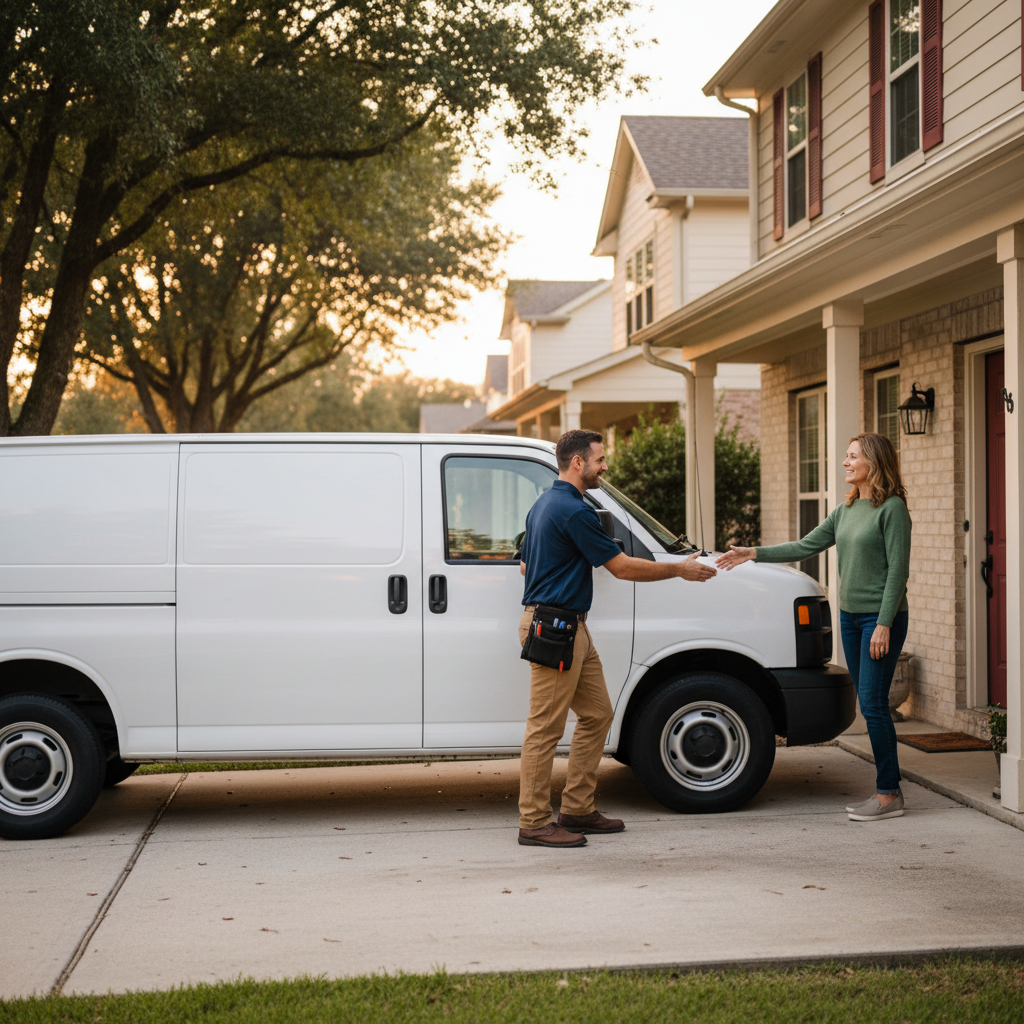
For a broader view of execution results across industries, skim our real-world wins on the case studies page; notice how consistent publishing and internal linking create compounding gains.
FAQ#
How long does local SEO take to show results?#
Many businesses notice early movement in 4–8 weeks if fundamentals are fixed quickly (GBP, NAP, reviews, and location pages). In competitive categories or dense metros, expect a quarter or more to cement Map Pack rankings. Consistency and quality are the differentiators, activity beats sporadic sprints.
What should I include on a city or service page?#
Answer questions locals actually ask: neighborhoods served, turnaround expectations, prep steps, photos of real work, reviews, and a clear call to call or book. Add LocalBusiness and FAQ schema, and interlink to service variants and nearby neighborhoods. Keep each page unique to avoid thin duplication.
Are citations still important for local SEO?#
Yes. Consistent NAP on trusted directories reinforces your GBP data and reduces ambiguity. Prioritize quality over volume, industry associations, chambers, and respected directories. Update citations any time your address, phone, or hours change to prevent ranking erosion.
How do reviews impact rankings and conversions?#
Reviews influence both visibility and buyer trust. Volume, velocity, and context matter. Encourage reviewers to mention the service and area naturally. Respond to every review, empathetic, timely replies are a quality and engagement signal, and they improve click-through from the Map Pack.
Can automation really help with local SEO?#
Absolutely. Recurring work, publishing, interlinking, schema, GBP activity, drives results, but it’s easy to drop. An execution engine sustains cadence and frees owners from task switching while preserving human approval for brand voice and sensitive content.
Manual vs Automated: Process Comparison#
| Area | Manual Workflow | Automation-Assisted Workflow |
|---|---|---|
| Keyword discovery | Ad hoc, slow, easy to stall | Continuous discovery tied to Search Console insights |
| Content production | Inconsistent cadence, bandwidth limits | Scheduled writing and publishing with approvals |
| On-page optimization | Manually updated, error-prone | Template-driven, schema-backed, consistent at scale |
| Internal linking | Often forgotten | Engine-driven linking to hubs and service pages |
| Backlinks | Outreach-heavy | Automated high-authority opportunities and local mentions |
| GBP activity | Irregular updates | Steady posts, Q&A, and media refresh |
| Reporting & iteration | Monthly, manual rollups | Always-on insights that feed next month’s plan |
If you’d like to see how execution changes outcomes, our blog library explains the operating model and shares playbooks you can adapt immediately.
Key Takeaways#
- Local SEO is a weekly operating system, not a one-time sprint.
- Focus on GBP, reviews, citations, content hubs, internal links, and media.
- Use this local SEO optimization guide to build a 30-day cadence you can sustain.
- Automation protects your cadence and compounds gains over time.
- Measure calls, directions, and messages, not rankings alone.
Related Topics#
- Building a service-and-city content hub that actually converts
- Designing review request workflows customers love to complete
- Turning GBP Insights and Search Console data into next month’s plan
- Structuring internal links to lift underperforming location pages
Conclusion and Next Steps#
- Treat local search as an operating rhythm: short, frequent actions beat sporadic sprints.
- Prioritize the levers with outsized impact: GBP hygiene, location content, reviews, citations, internal links, and media.
- Adopt automation so execution continues during your busiest weeks.
- Watch real business signals, calls, directions, bookings, to validate momentum.
Ready to turn this plan into motion? UpliftAI’s execution engine can research, write, optimize, interlink, add schema, and publish across your CMS while keeping your GBP active and building authority. Explore the Multi-Agent SEO Brain on our agent page and start building a local presence that shows up on Google and in AI answers.